Nutrient pollution
Nutrient pollution is a form of water pollution caused by the excess of certain nutrients, particularly nitrogen and phosphorus, in water bodies. These nutrients, while essential for plant and animal growth, can cause significant environmental and health problems when present in large amounts.
Causes[edit]
The primary sources of nutrient pollution are agriculture, urban runoff, and wastewater treatment plants. Agricultural activities, such as the use of fertilizers and manure, can lead to the runoff of nutrients into nearby water bodies. Urban runoff, which includes stormwater and snowmelt, can carry nutrients from lawns, gardens, and septic systems into water bodies. Wastewater treatment plants can also contribute to nutrient pollution if they do not adequately remove nutrients from the water before discharging it.
Effects[edit]
Excessive nutrients in water bodies can lead to a number of environmental problems. One of the most significant is eutrophication, a process in which nutrient-rich water leads to the rapid growth of algae and other aquatic plants. This can result in algal blooms, which can deplete oxygen levels in the water, harm aquatic life, and produce toxins that are harmful to humans and animals.
Nutrient pollution can also contribute to the formation of dead zones, areas in water bodies where oxygen levels are so low that most marine life cannot survive. These zones can have significant impacts on commercial and recreational fishing industries.
Prevention and Control[edit]
Preventing and controlling nutrient pollution involves a combination of regulatory measures, best management practices, and public education. Regulatory measures can include laws and regulations that limit the amount of nutrients that can be discharged from agricultural and urban sources. Best management practices can include techniques such as crop rotation, cover crops, and buffer strips that can help to reduce nutrient runoff from agricultural lands. Public education can help to raise awareness about the causes and effects of nutrient pollution and encourage individuals to take actions to reduce their own contributions to the problem.
See Also[edit]
 | This environment-related article is a stub. You can help WikiMD by expanding the page. |
-
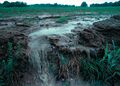 Runoff of soil and fertilizer
 -
Nutrient sources Gulf of Mexico and Chesapeake Bay - EPA 2010
-
Nutrient pollution
-
Harmful Algal Bloom in Western Lake Erie, July 9, 2018

Sponsored Health Resource

W8MD Weight Loss, Sleep & MedSpa
Looking for physician-supervised weight loss, semaglutide, tirzepatide, or GLP-1 receptor agonist options? W8MD helps eligible patients in New York City, Brooklyn, New Jersey, Connecticut, Pennsylvania, Delaware, and greater Philadelphia with medical weight loss, sleep medicine, and long-term maintenance support.
GLP-1 specials: Affordable GLP-1 injections NYC and Philadelphia starting from $29.99/week and up for semaglutide with insurance accepted for qualifying visits, and $45/week and up for tirzepatide with insurance accepted for qualifying visits. Self-pay options start from $59.99/week and up for semaglutide and $69.99/week and up for tirzepatide.
Medical weight loss NYC | Affordable GLP-1 injections NYC | Budget GLP-1 weight loss shots Philadelphia | New Jersey medical weight loss | NYC medical weight loss | Philadelphia medical weight loss | Sleep clinic NYC | W8MD's Philadelphia GLP-1 doctor | Weight loss prescriptions NYC
Book a W8MD appointment · View GLP-1 specials
Paid promotional message. Eligibility, pricing, insurance coverage, medication availability, and results vary. Medical evaluation required.

Medical Disclaimer: WikiMD is for informational purposes only and is not a substitute for professional medical advice. Content may be inaccurate or outdated and should not be used for diagnosis or treatment. Always consult your healthcare provider for medical decisions. Verify information with trusted sources such as CDC.gov and NIH.gov. By using this site, you agree that WikiMD is not liable for any outcomes related to its content. See full disclaimer.
Credits:Most images are courtesy of Wikimedia commons, and templates, categories Wikipedia, licensed under CC BY SA or similar.
Translate page: - East Asian
中文,
日本,
한국어,
South Asian
हिन्दी,
தமிழ்,
తెలుగు,
Urdu,
ಕನ್ನಡ,
Southeast Asian
Indonesian,
Vietnamese,
Thai,
မြန်မာဘာသာ,
বাংলা
European
español,
Deutsch,
français,
Greek,
português do Brasil,
polski,
română,
русский,
Nederlands,
norsk,
svenska,
suomi,
Italian
Middle Eastern & African
عربى,
Turkish,
Persian,
Hebrew,
Afrikaans,
isiZulu,
Kiswahili,
Other
Bulgarian,
Hungarian,
Czech,
Swedish,
മലയാളം,
मराठी,
ਪੰਜਾਬੀ,
ગુજરાતી,
Portuguese,
Ukrainian


(NRCS_Photo_Gallery).jpg)
.jpg)