Solitary nucleus
Solitary nucleus is a structure located in the brainstem that is primarily involved in the autonomic nervous system. It is also known as the nucleus solitarius or nucleus of the solitary tract.
Anatomy[edit]
The solitary nucleus is located in the medulla oblongata, a part of the brainstem. It extends from the level of the pons to the lower border of the medulla. The nucleus is situated close to the midline, embedded within the solitary tract.
Function[edit]
The solitary nucleus is involved in several important functions. It receives sensory information from chemoreceptors and baroreceptors in the body. These receptors monitor the levels of oxygen and carbon dioxide in the blood, as well as blood pressure. The solitary nucleus also receives input from the gastrointestinal tract, allowing it to play a role in the regulation of digestion.
In addition, the solitary nucleus is involved in the sense of taste. It receives taste information from the anterior two-thirds of the tongue via the facial nerve, and from the posterior one-third of the tongue via the glossopharyngeal nerve.
Clinical significance[edit]
Damage to the solitary nucleus can result in a variety of symptoms, depending on the extent and location of the damage. These can include difficulties with swallowing, changes in heart rate and blood pressure, and loss of taste sensation.
See also[edit]
- Brainstem
- Medulla oblongata
- Autonomic nervous system
- Chemoreceptor
- Baroreceptor
- Gastrointestinal tract
- Facial nerve
- Glossopharyngeal nerve
References[edit]
 | This neuroscience article is a stub. You can help WikiMD by expanding the page. |
-
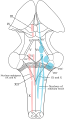 Solitary nucleus
 -
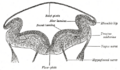 Solitary nucleus
 -
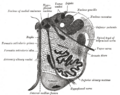 Solitary nucleus
 -
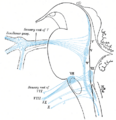 Solitary nucleus


Medical Disclaimer: WikiMD is for informational purposes only and is not a substitute for professional medical advice. Content may be inaccurate or outdated and should not be used for diagnosis or treatment. Always consult your healthcare provider for medical decisions. Verify information with trusted sources such as CDC.gov and NIH.gov. By using this site, you agree that WikiMD is not liable for any outcomes related to its content. See full disclaimer.
Credits:Most images are courtesy of Wikimedia commons, and templates, categories Wikipedia, licensed under CC BY SA or similar.
Translate page: - East Asian
中文,
日本,
한국어,
South Asian
हिन्दी,
தமிழ்,
తెలుగు,
Urdu,
ಕನ್ನಡ,
Southeast Asian
Indonesian,
Vietnamese,
Thai,
မြန်မာဘာသာ,
বাংলা
European
español,
Deutsch,
français,
Greek,
português do Brasil,
polski,
română,
русский,
Nederlands,
norsk,
svenska,
suomi,
Italian
Middle Eastern & African
عربى,
Turkish,
Persian,
Hebrew,
Afrikaans,
isiZulu,
Kiswahili,
Other
Bulgarian,
Hungarian,
Czech,
Swedish,
മലയാളം,
मराठी,
ਪੰਜਾਬੀ,
ગુજરાતી,
Portuguese,
Ukrainian

