Neonatal meningitis

Editor-In-Chief: Prab R Tumpati, MD
Obesity, Sleep & Internal medicine
Founder, WikiMD Wellnesspedia &
W8MD's weight loss doctor NYC
Philadelphia GLP-1 weight loss and GLP-1 clinic NYC
| Neonatal meningitis | |
|---|---|

| |
| Synonyms | N/A |
| Pronounce | N/A |
| Specialty | N/A |
| Symptoms | Fever, irritability, poor feeding, lethargy, seizures |
| Complications | Hearing loss, cerebral palsy, intellectual disability |
| Onset | Neonatal period |
| Duration | Varies |
| Types | N/A |
| Causes | Bacterial infection (e.g., Group B Streptococcus, Escherichia coli, Listeria monocytogenes) |
| Risks | Premature birth, low birth weight, prolonged rupture of membranes |
| Diagnosis | Lumbar puncture, blood culture, imaging studies |
| Differential diagnosis | Sepsis, encephalitis, intracranial hemorrhage |
| Prevention | N/A |
| Treatment | Antibiotics, supportive care |
| Medication | N/A |
| Prognosis | Varies; can be severe |
| Frequency | Rare |
| Deaths | N/A |
.jpg)


Neonatal meningitis is a serious medical condition that affects newborns. It is an infection of the meninges, the protective membranes that cover the brain and spinal cord. This condition is most commonly caused by bacterial infection and can lead to severe complications if not treated promptly.
Causes[edit]
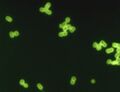
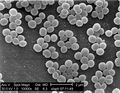
The most common causes of neonatal meningitis are bacterial infections. These can be transmitted from the mother to the baby during childbirth. The most common bacteria that cause neonatal meningitis are Group B Streptococcus, Escherichia coli, and less frequently, Listeria monocytogenes.
Symptoms[edit]
The symptoms of neonatal meningitis can be subtle and may not appear immediately. They can include:
- High or low body temperature
- Irritability or lethargy
- Poor feeding
- Vomiting
- Seizures
- Bulging fontanelle (the soft spot on the top of a baby's head)
Diagnosis[edit]
Diagnosis of neonatal meningitis is typically made through a lumbar puncture, also known as a spinal tap. This procedure involves taking a sample of cerebrospinal fluid (CSF) from the baby's spine and testing it for the presence of bacteria.
Treatment[edit]
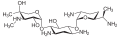
Treatment for neonatal meningitis typically involves intravenous antibiotics. The specific antibiotics used will depend on the type of bacteria causing the infection. In severe cases, hospitalization may be required.
Prognosis[edit]
The prognosis for neonatal meningitis varies. With prompt treatment, many babies can recover fully. However, in severe cases, the condition can lead to long-term complications such as hearing loss, vision problems, and developmental delays.
Prevention[edit]
Prevention of neonatal meningitis involves screening pregnant women for Group B Streptococcus and treating them with antibiotics if they are carriers. In addition, good hygiene practices can help to prevent the spread of bacteria that can cause meningitis.
Additional images[edit]
-
 Neonatal_meningitis
 -
 Neonatal_meningitis
 -
 Neonatal_meningitis
 -
 Neonatal_meningitis
 -
 Neonatal_meningitis
 -
 Neonatal_meningitis


Medical Disclaimer: WikiMD is for informational purposes only and is not a substitute for professional medical advice. Content may be inaccurate or outdated and should not be used for diagnosis or treatment. Always consult your healthcare provider for medical decisions. Verify information with trusted sources such as CDC.gov and NIH.gov. By using this site, you agree that WikiMD is not liable for any outcomes related to its content. See full disclaimer.
Credits:Most images are courtesy of Wikimedia commons, and templates, categories Wikipedia, licensed under CC BY SA or similar.
Translate page: - East Asian
中文,
日本,
한국어,
South Asian
हिन्दी,
தமிழ்,
తెలుగు,
Urdu,
ಕನ್ನಡ,
Southeast Asian
Indonesian,
Vietnamese,
Thai,
မြန်မာဘာသာ,
বাংলা
European
español,
Deutsch,
français,
Greek,
português do Brasil,
polski,
română,
русский,
Nederlands,
norsk,
svenska,
suomi,
Italian
Middle Eastern & African
عربى,
Turkish,
Persian,
Hebrew,
Afrikaans,
isiZulu,
Kiswahili,
Other
Bulgarian,
Hungarian,
Czech,
Swedish,
മലയാളം,
मराठी,
ਪੰਜਾਬੀ,
ગુજરાતી,
Portuguese,
Ukrainian

