Middle cervical cardiac nerve
The middle cervical cardiac nerve is one of the three cardiac nerves that originate from the cervical ganglia of the sympathetic nervous system. It plays a crucial role in the autonomic regulation of the heart.
Anatomy[edit]
The middle cervical cardiac nerve arises from the middle cervical ganglion, which is located at the level of the sixth cervical vertebra. This nerve descends towards the thoracic cavity and contributes to the cardiac plexus, a network of nerves that innervates the heart.
Function[edit]
The primary function of the middle cervical cardiac nerve is to transmit sympathetic signals to the heart. These signals can increase the heart rate and the force of cardiac contractions, thus playing a vital role in the body's fight-or-flight response. The nerve fibers release norepinephrine, which binds to adrenergic receptors on the heart muscle, leading to increased cardiac activity.
Clinical Significance[edit]
Damage or dysfunction of the middle cervical cardiac nerve can lead to various cardiac issues, including arrhythmias and other heart rate abnormalities. Understanding the pathways and functions of this nerve is essential for diagnosing and treating certain cardiovascular conditions.
Related Pages[edit]
- Cardiac nerves
- Cervical ganglia
- Sympathetic nervous system
- Cardiac plexus
- Norepinephrine
- Adrenergic receptors
- Arrhythmia
Categories[edit]
 | This medical article is a stub. You can help WikiMD by expanding the page. |
-
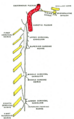 Gray's Anatomy illustration of the middle cervical cardiac nerve

Advertise on WikiMD — 81,000+ full articles, ~900,000 total pages, ~250 million page views. Global reach, limited time promotional rates from $1/page/day. Learn more · View stats


Translate page: - East Asian
中文,
日本,
한국어,
South Asian
हिन्दी,
தமிழ்,
తెలుగు,
Urdu,
ಕನ್ನಡ,
Southeast Asian
Indonesian,
Vietnamese,
Thai,
မြန်မာဘာသာ,
বাংলা
European
español,
Deutsch,
français,
Greek,
português do Brasil,
polski,
română,
русский,
Nederlands,
norsk,
svenska,
suomi,
Italian
Middle Eastern & African
عربى,
Turkish,
Persian,
Hebrew,
Afrikaans,
isiZulu,
Kiswahili,
Other
Bulgarian,
Hungarian,
Czech,
Swedish,
മലയാളം,
मराठी,
ਪੰਜਾਬੀ,
ગુજરાતી,
Portuguese,
Ukrainian
About WikiMD • Contact • Disclaimer • Privacy • Copyright • Site statistics
Some content and images may originate from Wikimedia Commons or Wikipedia and remain subject to their stated licenses. Unless otherwise noted, eligible WikiMD content is available under CC BY-SA 4.0.
WikiMD Wellnesspedia — Free health & wellness information for patients, students, and health professionals.

