Mesopotamia
Mesopotamia is a historical region located in the eastern Mediterranean. It is bounded to the northeast by the Zagros Mountains, to the west by the Syrian Desert, and to the south by the Arabian Desert. The name "Mesopotamia" comes from the ancient Greek words "mesos" (middle) and "potamos" (river), meaning "land between the rivers". The region is known for its rich history and cultural heritage, being home to some of the earliest known civilizations.
Geography[edit]
Mesopotamia encompasses the land between the Euphrates and Tigris rivers, both of which have their headwaters in the Taurus Mountains of eastern Turkey. The region is generally flat, making it ideal for agriculture. It is often referred to as the Fertile Crescent due to its fertile soil and crescent shape.
History[edit]
Mesopotamia has a long and complex history. It was home to many ancient civilizations, including the Sumerians, Akkadians, Babylonians, and Assyrians. These civilizations made significant contributions to human culture, including the invention of writing, the development of complex social structures, and advances in art, science, and technology.
Culture[edit]
The cultures of Mesopotamia were diverse and sophisticated. They developed complex social structures, with a ruling class of kings and priests, a middle class of merchants and artisans, and a lower class of farmers and slaves. They also developed a complex system of writing, known as cuneiform, which was used for record keeping, legal documents, literature, and religious texts.
Religion[edit]
Religion played a central role in Mesopotamian society. The people believed in a pantheon of gods and goddesses, who were thought to control all aspects of the natural world. The most important deities were Anu, the sky god; Enlil, the god of wind and storm; and Enki, the god of water and wisdom.
See also[edit]
References[edit]
<references />
 | |
|---|---|
 |
 |
-
 Mesopotamia and Syria map
 -
 Mesopotamia landscape
 -
 Mosul river
 -
 Iraqi marshes at night
 -
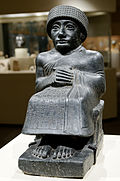 Statue of Gudea
 -
 Jarmo to Ubaid period
 -
 Ancient Egypt and Mesopotamia c. 1450 BC
 -
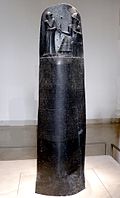 Code of Hammurabi
 -
 Flood Tablet of the Epic of Gilgamesh
 -
 Mathematical clay tablet
 -
 Medical recipe tablet
 -
 Lilith from Isin-Larsa and Babylon period


Ad. Transform your health with W8MD Weight Loss, Sleep & MedSpa

Tired of being overweight?
Get started with evidence based, physician-supervised
affordable GLP-1 weight loss injections
Now available in New York City and Philadelphia:
- Semaglutide starting from $59.99/week and up
- Tirzepatide starting from $69.99/week and up (dose dependent)
✔ Evidence-based medical weight loss ✔ Insurance-friendly visits available ✔ Same-week appointments, evenings & weekends
Learn more:
Start your transformation today with W8MD weight loss centers.
|
WikiMD Medical Encyclopedia |
Medical Disclaimer: WikiMD is for informational purposes only and is not a substitute for professional medical advice. Content may be inaccurate or outdated and should not be used for diagnosis or treatment. Always consult your healthcare provider for medical decisions. Verify information with trusted sources such as CDC.gov and NIH.gov. By using this site, you agree that WikiMD is not liable for any outcomes related to its content. See full disclaimer.
Credits:Most images are courtesy of Wikimedia commons, and templates, categories Wikipedia, licensed under CC BY SA or similar.
Translate this page: - East Asian
中文,
日本,
한국어,
South Asian
हिन्दी,
தமிழ்,
తెలుగు,
Urdu,
ಕನ್ನಡ,
Southeast Asian
Indonesian,
Vietnamese,
Thai,
မြန်မာဘာသာ,
বাংলা
European
español,
Deutsch,
français,
Greek,
português do Brasil,
polski,
română,
русский,
Nederlands,
norsk,
svenska,
suomi,
Italian
Middle Eastern & African
عربى,
Turkish,
Persian,
Hebrew,
Afrikaans,
isiZulu,
Kiswahili,
Other
Bulgarian,
Hungarian,
Czech,
Swedish,
മലയാളം,
मराठी,
ਪੰਜਾਬੀ,
ગુજરાતી,
Portuguese,
Ukrainian
