Medicinal uses of fungi
Fungi, a kingdom of organisms distinct from plants, animals, and bacteria, have been integral to traditional medicine across various cultures for centuries. With the advent of modern scientific research, the medicinal properties of fungi are increasingly being validated, leading to their incorporation into contemporary medical practices. This article explores the significant contributions of fungi to medicine, highlighting key species and their applications.
Historical Context[edit]
The use of fungi in medicine can be traced back to ancient civilizations. The Ebers Papyrus, an Egyptian document dating back to 1550 BCE, mentions the use of fungal molds for treating wounds. Similarly, traditional Chinese medicine has utilized fungi, such as Ganoderma lucidum (Reishi) and Cordyceps sinensis, for promoting longevity and health for thousands of years.
Antibiotics[edit]
The discovery of penicillin by Alexander Fleming in 1928 marked a revolution in medical science. Penicillin, derived from the mold Penicillium notatum, was the first true antibiotic and has saved countless lives from bacterial infections. Since then, other fungi have been found to produce antibiotic compounds, such as cephalosporins from Acremonium species.
Immunosuppressants[edit]
Fungi have also contributed to the field of organ transplantation through the development of immunosuppressant drugs. Cyclosporine, derived from the fungus Tolypocladium inflatum, is used to prevent organ rejection in transplant patients by suppressing the immune response.
Cholesterol-lowering Drugs[edit]
Statins, a class of drugs used to lower cholesterol levels in the blood, were initially discovered in fungi. Lovastatin, the first statin to be marketed, was isolated from the fungus Aspergillus terreus. Statins work by inhibiting an enzyme involved in the production of cholesterol in the liver.
Anticancer Agents[edit]
Several fungi produce compounds with anticancer properties. For example, Psilocybin from Psilocybe mushrooms is being researched for its potential to alleviate end-of-life anxiety in terminal cancer patients. Additionally, Trametes versicolor (Turkey Tail) contains polysaccharide-K (PSK), a substance used as an adjuvant in cancer therapy in Japan.
Antifungal Drugs[edit]
Fungi themselves can cause infections, leading to the development of antifungal drugs. Amphotericin B, derived from Streptomyces nodosus (a bacterium, but initially thought to be a fungus), is a potent antifungal used to treat serious fungal infections. Newer antifungals, such as echinocandins, target the fungal cell wall and are effective against a broad spectrum of fungal pathogens.
Psychoactive and Neuroprotective Properties[edit]
Some fungi have psychoactive properties and are being studied for their potential in treating psychiatric disorders. Psilocybin, for example, shows promise in the treatment of depression and post-traumatic stress disorder (PTSD). Hericium erinaceus (Lion's Mane) is under investigation for its neuroprotective effects and potential to stimulate nerve growth.
Conclusion[edit]
The medicinal uses of fungi are vast and varied, offering promising avenues for new treatments and therapies. As research continues to uncover the potential of fungi in medicine, it is likely that their role will become even more significant in the future.
-
 Ling Zhi mushroom used in traditional medicine
 -
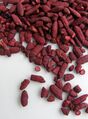 Red yeast rice, a source of natural statins
 -
 Endocrocin, a fungal metabolite
 -
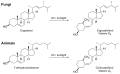 Vitamin D biosynthesis in fungi and animals


Medical Disclaimer: WikiMD is for informational purposes only and is not a substitute for professional medical advice. Content may be inaccurate or outdated and should not be used for diagnosis or treatment. Always consult your healthcare provider for medical decisions. Verify information with trusted sources such as CDC.gov and NIH.gov. By using this site, you agree that WikiMD is not liable for any outcomes related to its content. See full disclaimer.
Credits:Most images are courtesy of Wikimedia commons, and templates, categories Wikipedia, licensed under CC BY SA or similar.
Translate page: - East Asian
中文,
日本,
한국어,
South Asian
हिन्दी,
தமிழ்,
తెలుగు,
Urdu,
ಕನ್ನಡ,
Southeast Asian
Indonesian,
Vietnamese,
Thai,
မြန်မာဘာသာ,
বাংলা
European
español,
Deutsch,
français,
Greek,
português do Brasil,
polski,
română,
русский,
Nederlands,
norsk,
svenska,
suomi,
Italian
Middle Eastern & African
عربى,
Turkish,
Persian,
Hebrew,
Afrikaans,
isiZulu,
Kiswahili,
Other
Bulgarian,
Hungarian,
Czech,
Swedish,
മലയാളം,
मराठी,
ਪੰਜਾਬੀ,
ગુજરાતી,
Portuguese,
Ukrainian

