Mazamorra
Mazamorra is a traditional starch-based dessert or beverage that originated in the Iberian Peninsula. It is popular in many Latin American countries and regions of Spain. The dish is typically made from a mixture of corn or maize, milk, sugar, and cinnamon. The consistency of Mazamorra can vary from a thick pudding to a thin, drinkable beverage, depending on regional preferences and the specific recipe used.
History[edit]
The origins of Mazamorra can be traced back to the Moorish occupation of the Iberian Peninsula, where it was a common dish among the Muslim population. The name "Mazamorra" is derived from the Arabic word "mazamorra", which means "mixture". After the Reconquista, the dish was adopted by the Christian population and spread to the New World with the Spanish colonizers.
Variations[edit]
There are many regional variations of Mazamorra across Latin America and Spain. In Colombia, Mazamorra is often served as a beverage with panela or unrefined whole cane sugar. In Peru, Mazamorra morada is a popular dessert made from purple corn and fruit. In the Andalusia region of Spain, Mazamorra is a cold soup made from bread, garlic, vinegar, and olive oil.
Preparation[edit]
The basic preparation of Mazamorra involves soaking corn or maize in water, then cooking it with milk, sugar, and cinnamon until it reaches the desired consistency. Some recipes may also include additional ingredients such as vanilla, raisins, or fruit.
Cultural Significance[edit]
Mazamorra holds a significant place in many Latin American and Spanish cultures. It is often associated with traditional celebrations and holidays, and is a common dish in many households. In some regions, Mazamorra is also used as a home remedy for various ailments, due to the nutritional properties of its main ingredients.
See Also[edit]

-
 Mazamorra
 -
 Mazamorra Antioqueña
 -
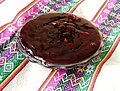 Mazamorra Morada
 -
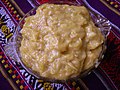 Mazamorra de Calabaza


Sponsored Health Resource

W8MD Weight Loss, Sleep & MedSpa
Looking for physician-supervised weight loss, semaglutide, tirzepatide, or GLP-1 receptor agonist options? W8MD helps eligible patients in New York City, Brooklyn, New Jersey, Connecticut, Pennsylvania, Delaware, and greater Philadelphia with medical weight loss, sleep medicine, and long-term maintenance support.
GLP-1 specials: Affordable GLP-1 injections NYC and Philadelphia starting from $29.99/week and up for semaglutide with insurance accepted for qualifying visits, and $45/week and up for tirzepatide with insurance accepted for qualifying visits. Self-pay options start from $59.99/week and up for semaglutide and $69.99/week and up for tirzepatide.
Medical weight loss NYC | Affordable GLP-1 injections NYC | Budget GLP-1 weight loss shots Philadelphia | New Jersey medical weight loss | NYC medical weight loss | Philadelphia medical weight loss | Sleep clinic NYC | W8MD's Philadelphia GLP-1 doctor | Weight loss prescriptions NYC
Book a W8MD appointment · View GLP-1 specials
Paid promotional message. Eligibility, pricing, insurance coverage, medication availability, and results vary. Medical evaluation required.

Medical Disclaimer: WikiMD is for informational purposes only and is not a substitute for professional medical advice. Content may be inaccurate or outdated and should not be used for diagnosis or treatment. Always consult your healthcare provider for medical decisions. Verify information with trusted sources such as CDC.gov and NIH.gov. By using this site, you agree that WikiMD is not liable for any outcomes related to its content. See full disclaimer.
Credits:Most images are courtesy of Wikimedia commons, and templates, categories Wikipedia, licensed under CC BY SA or similar.
Translate page: - East Asian
中文,
日本,
한국어,
South Asian
हिन्दी,
தமிழ்,
తెలుగు,
Urdu,
ಕನ್ನಡ,
Southeast Asian
Indonesian,
Vietnamese,
Thai,
မြန်မာဘာသာ,
বাংলা
European
español,
Deutsch,
français,
Greek,
português do Brasil,
polski,
română,
русский,
Nederlands,
norsk,
svenska,
suomi,
Italian
Middle Eastern & African
عربى,
Turkish,
Persian,
Hebrew,
Afrikaans,
isiZulu,
Kiswahili,
Other
Bulgarian,
Hungarian,
Czech,
Swedish,
മലയാളം,
मराठी,
ਪੰਜਾਬੀ,
ગુજરાતી,
Portuguese,
Ukrainian

