Map–territory relation
Map–territory relation refers to the relationship between an object and a representation of that object, as in the relation between a geographical territory and a map of it. The concept is often illustrated with the phrase "the map is not the territory," which was coined by Alfred Korzybski, a Polish-American independent scholar who developed the field of General Semantics. This principle highlights the differences between belief and reality, the understanding that an abstraction derived from something, or a reaction to a stimulus, is not the thing itself. The map–territory relation is a foundational concept in epistemology, the philosophy of language, systems theory, and science in general.
Overview[edit]
The map–territory relation describes the relationship between an object and a representation of that object. Korzybski's assertion was that the map (a symbolic representation of a territory) and the territory (the actual land being represented) are not identical. Maps are abstractions or simplifications of reality, designed to convey information. This concept is applicable beyond physical maps and territories to include any symbolic representation of reality, including thoughts, descriptions, models, simulations, and more.
Applications[edit]
The map–territory relation has applications in various fields:
- In Epistemology, it serves as a metaphor for the relationship between knowledge and reality. It emphasizes that our perceptions and descriptions of the world are not the world itself but merely representations of it.
- In Philosophy of Language, it highlights the limitations of language as a tool for capturing the full essence of reality.
- In Systems Theory, it is used to understand the relationship between a system and its model, emphasizing that while models are useful for understanding and predicting system behavior, they are simplifications and cannot capture every detail of the system.
- In Psychology, particularly in cognitive and behavioral therapies, it helps in understanding how people's mental models of the world affect their reactions and behaviors. It suggests that problems can arise when an individual's "map" does not accurately represent the "territory" of their experience.
Korzybski's Work[edit]
Alfred Korzybski's formulation of the map–territory relation was part of his broader work on General Semantics, which he introduced in his 1933 book Science and Sanity. Korzybski argued that human knowledge is limited both by the structure of our nervous systems and by the structure of our languages. Humans can therefore never directly know reality; instead, they know only their perceptions and interpretations of it, which are shaped by the symbolic systems they use.
Implications[edit]
The map–territory relation has several important implications:
- It cautions against mistaking models or representations for reality itself.
- It suggests that all knowledge is, to some extent, a simplification and abstraction of reality.
- It underscores the importance of being aware of the limitations of our understanding and the tools we use to navigate the world.
See Also[edit]
References[edit]
<references/>

This article is a philosophy-related stub. You can help WikiMD by expanding it!
-
 Tissot world from space
 -
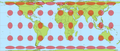 Tissot Behrmann


Ad. Transform your life with W8MD's Budget GLP-1 injections from $29.99


W8MD offers a medical weight loss program to GLP1 weight loss doctor Philadelphia. Our physician-supervised medical weight loss NYC provides:
- Weight loss injections NYC (generic and brand names):
- Zepbound / Mounjaro, Wegovy / Ozempic, Saxenda
- Learn more on Budget GLP1 weight loss injections NYC & Philadelphia GLP1 weight loss shots
- Most insurances accepted or discounted self-pay rates. We will obtain insurance prior authorizations if needed.
- Generic GLP1 weight loss injections from $29.99 for the starting dose of Semaglutide and $45.00 for Tirzepatide with insurance for the visit.
- Also offer prescription weight loss medications including Phentermine, Qsymia, Diethylpropion, Contrave etc.
NYC weight loss doctor appointmentsNYC weight loss doctor appointments
Start your NYC weight loss journey today at our NYC medical weight loss and Philadelphia medical weight loss clinics.
- Call 718-946-5500 to lose weight in NYC or for medical weight loss in Philadelphia 215-676-2334.
- Tags:GLP1 medical weight loss doctor NYC, Philadelphia lose weight Zepbound NYC, Budget GLP1 weight loss injections, Wegovy Philadelphia, Wegovy NYC, Philadelphia medical weight loss, Brookly weight loss Wegovy NYC and Best weight loss program NYC


|
WikiMD's Wellness Encyclopedia |
| Let Food Be Thy Medicine Medicine Thy Food - Hippocrates |
Medical Disclaimer: WikiMD is not a substitute for professional medical advice. The information on WikiMD is provided as an information resource only, may be incorrect, outdated or misleading, and is not to be used or relied on for any diagnostic or treatment purposes. Please consult your health care provider before making any healthcare decisions or for guidance about a specific medical condition. WikiMD expressly disclaims responsibility, and shall have no liability, for any damages, loss, injury, or liability whatsoever suffered as a result of your reliance on the information contained in this site. By visiting this site you agree to the foregoing terms and conditions, which may from time to time be changed or supplemented by WikiMD. If you do not agree to the foregoing terms and conditions, you should not enter or use this site. See full disclaimer.
Credits:Most images are courtesy of Wikimedia commons, and templates, categories Wikipedia, licensed under CC BY SA or similar.
Translate this page: - East Asian
中文,
日本,
한국어,
South Asian
हिन्दी,
தமிழ்,
తెలుగు,
Urdu,
ಕನ್ನಡ,
Southeast Asian
Indonesian,
Vietnamese,
Thai,
မြန်မာဘာသာ,
বাংলা
European
español,
Deutsch,
français,
Greek,
português do Brasil,
polski,
română,
русский,
Nederlands,
norsk,
svenska,
suomi,
Italian
Middle Eastern & African
عربى,
Turkish,
Persian,
Hebrew,
Afrikaans,
isiZulu,
Kiswahili,
Other
Bulgarian,
Hungarian,
Czech,
Swedish,
മലയാളം,
मराठी,
ਪੰਜਾਬੀ,
ગુજરાતી,
Portuguese,
Ukrainian

.svg)