Epistemology
Epistemology is the branch of philosophy that studies the nature, origin, and scope of knowledge and belief. The term "epistemology" comes from the Greek words "episteme" and "logos". "Episteme" can be translated as "knowledge" or "understanding" and "logos" can be translated as "account" or "argument". Thus, 'epistemology' is the study of knowledge or the study of how we know what we know.
Definition[edit]
Epistemology, as a field of study, is concerned with four main questions: What is knowledge? How is knowledge acquired? What do people know? How do we know what we know? It is these questions that epistemology seeks to answer.
Branches of Epistemology[edit]
Epistemology can be divided into three sub-branches: empiricism, rationalism, and skepticism.
Empiricism[edit]
Empiricism is the belief that knowledge comes primarily from sensory experience. It emphasizes the role of experience and evidence, especially sensory perception, in the formation of ideas, over the notion of innate ideas or traditions.
Rationalism[edit]
Rationalism is the belief that reason and logic are the primary sources of knowledge. It holds that knowledge is not derived from experience, as empiricism claims, but rather is acquired through a process of reasoning and deduction.
Skepticism[edit]
Skepticism is the philosophical position that one should refrain from making truth claims, and avoid the postulation of final truths. This is not necessarily quite the same as claiming that truth is impossible (which would itself be a truth claim), but is often used in this sense.
See Also[edit]
References[edit]

This WikiMD article can only be edited by registered and verified editors. You can log in or register.
-
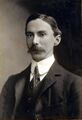 Bertrand Russell, 1907
 -
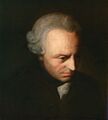 Immanuel Kant, circa 1790
 -
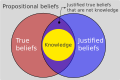 Justified True Belief model of knowledge
 -
 Alvin Goldman, 1966
 -
 Portrait of Dharmakirti, Tibet, c. 15th-16th century
 -
 Portrait of René Descartes by Frans Hals


Advertise on WikiMD — 81,000+ full articles, ~900,000 total pages, ~250 million page views. Global reach, limited time promotional rates from $1/page/day. Learn more · View stats


Translate page: - East Asian
中文,
日本,
한국어,
South Asian
हिन्दी,
தமிழ்,
తెలుగు,
Urdu,
ಕನ್ನಡ,
Southeast Asian
Indonesian,
Vietnamese,
Thai,
မြန်မာဘာသာ,
বাংলা
European
español,
Deutsch,
français,
Greek,
português do Brasil,
polski,
română,
русский,
Nederlands,
norsk,
svenska,
suomi,
Italian
Middle Eastern & African
عربى,
Turkish,
Persian,
Hebrew,
Afrikaans,
isiZulu,
Kiswahili,
Other
Bulgarian,
Hungarian,
Czech,
Swedish,
മലയാളം,
मराठी,
ਪੰਜਾਬੀ,
ગુજરાતી,
Portuguese,
Ukrainian
About WikiMD • Contact • Disclaimer • Privacy • Copyright • Site statistics
Some content and images may originate from Wikimedia Commons or Wikipedia and remain subject to their stated licenses. Unless otherwise noted, eligible WikiMD content is available under CC BY-SA 4.0.
WikiMD Wellnesspedia — Free health & wellness information for patients, students, and health professionals.

