Magnetoreception
Magnetoreception refers to the ability of an organism to sense magnetic fields and to use this information for orientation and navigation. This phenomenon is observed in a variety of organisms, including birds, insects, mammals, and even some types of bacteria.
Overview[edit]
Magnetoreception is a sensory perception that allows an organism to detect, orient to, and navigate using magnetic fields. This ability is used by many animals to navigate over long distances, such as migratory birds, sea turtles, and bees. It is also used by some animals for short-range navigation, such as rodents and bats.
Mechanisms of Magnetoreception[edit]
There are two main theories on how magnetoreception works: the magnetite-based theory and the radical-pair theory.
Magnetite-based Theory[edit]
The magnetite-based theory suggests that organisms have tiny particles of magnetite (a type of iron ore) in their bodies that respond to magnetic fields. These particles could be located in various parts of the body, such as the beak of birds or the abdomen of bees.
Radical-pair Theory[edit]
The radical-pair theory suggests that magnetoreception involves a chemical reaction in the eyes of animals. This reaction is influenced by the Earth's magnetic field and affects the sensitivity of the animal's vision, allowing it to detect changes in the magnetic field.
Magnetoreception in Different Species[edit]
Magnetoreception has been observed in a variety of species, each with its unique mechanisms and uses.
Birds[edit]
Many species of birds, such as pigeons and migratory birds, use magnetoreception for navigation. They can sense the Earth's magnetic field and use it to orient themselves and navigate over long distances.
Insects[edit]
Some insects, like bees and ants, also use magnetoreception. Bees, for example, use it to navigate to and from their hives, while ants use it to find their way back to their nests.
Mammals[edit]
Certain mammals, such as bats and rodents, also exhibit magnetoreception. Bats use it to navigate during their nightly flights, while rodents use it to orient themselves in their burrows.
See Also[edit]
References[edit]
 | This medical article is a stub. You can help WikiMD by expanding the page. |
-
Magnetoreception
-
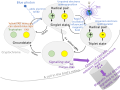 Quantum Magnetoreception in Birds
 -
Effect of RF interference on Magnetoreception in Birds
-
Magnetoreception
-
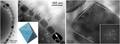 Magnetite magnetosomes in Gammaproteobacteria
 -
 Magnetoreception
 -
Magnetoreception
-
Magnetoreception
-
Magnetoreception
-
Magnetoreception
-
 Magnetoreception
 -
Magnetoreception


.jpg)
.jpg)
Advertise on WikiMD — 81,000+ full articles, ~900,000 total pages, ~250 million page views. Global reach, limited time promotional rates from $1/page/day. Learn more · View stats

Translate page: - East Asian
中文,
日本,
한국어,
South Asian
हिन्दी,
தமிழ்,
తెలుగు,
Urdu,
ಕನ್ನಡ,
Southeast Asian
Indonesian,
Vietnamese,
Thai,
မြန်မာဘာသာ,
বাংলা
European
español,
Deutsch,
français,
Greek,
português do Brasil,
polski,
română,
русский,
Nederlands,
norsk,
svenska,
suomi,
Italian
Middle Eastern & African
عربى,
Turkish,
Persian,
Hebrew,
Afrikaans,
isiZulu,
Kiswahili,
Other
Bulgarian,
Hungarian,
Czech,
Swedish,
മലയാളം,
मराठी,
ਪੰਜਾਬੀ,
ગુજરાતી,
Portuguese,
Ukrainian
About WikiMD • Contact • Disclaimer • Privacy • Copyright • Site statistics
Some content and images may originate from Wikimedia Commons or Wikipedia and remain subject to their stated licenses. Unless otherwise noted, eligible WikiMD content is available under CC BY-SA 4.0.
WikiMD Wellnesspedia — Free health & wellness information for patients, students, and health professionals.


_(cropped).jpg)


