Lunar New Year
Lunar New Year is a significant holiday celebrated in many Asian countries and regions, including China, Vietnam, Korea, and Taiwan. It is also known as the Spring Festival in China, Tết in Vietnam, Seollal in Korea, and Tsagaan Sar in Mongolia. The holiday is based on the lunisolar calendar, which is why it is referred to as the Lunar New Year.
Origins[edit]
The Lunar New Year has ancient roots in the Chinese calendar, which is a lunisolar calendar. The holiday was traditionally a time to honor household and heavenly deities, as well as ancestors. It was also a time to bring families together for feasting.
Celebrations[edit]
Celebrations vary widely depending on the country and even within regions of the same country. However, common themes include family gatherings, feasting, gift-giving, and various customs intended to bring good luck for the coming year.
In China, the Lunar New Year is marked by the Chinese New Year celebrations, which include the famous Dragon Dance and Lion Dance, as well as the lighting of firecrackers.
In Vietnam, the Lunar New Year is known as Tết, and is the most important holiday in the country. Celebrations include cooking special holiday foods, cleaning the house, and making offerings at the family altar.
In Korea, the Lunar New Year is known as Seollal, and is one of the most important traditional holidays of the year. Celebrations include ancestral rites, wearing traditional clothing known as Hanbok, and playing traditional games.
Date[edit]
The date of the Lunar New Year varies from year to year, but it generally falls between January 21 and February 20. The exact date is determined by the lunar calendar, with the holiday falling on the new moon that comes between the Winter Solstice and the Spring Equinox.
See Also[edit]
 | This Asia-related article is a stub. You can help WikiMD by expanding the page. |
 | This holiday-related article is a stub. You can help WikiMD by expanding the page. |
-
 Lunar New Year
 -
 Lunar New Year
 -
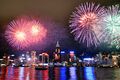 Lunar New Year
 -
 Dragon in Chinatown NYC Lunar New Year
 -
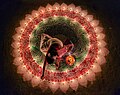 Lunar New Year
 -
 Lunar New Year
.jpg)
.jpg)
.jpg)

.jpg)
.png)

Medical Disclaimer: WikiMD is for informational purposes only and is not a substitute for professional medical advice. Content may be inaccurate or outdated and should not be used for diagnosis or treatment. Always consult your healthcare provider for medical decisions. Verify information with trusted sources such as CDC.gov and NIH.gov. By using this site, you agree that WikiMD is not liable for any outcomes related to its content. See full disclaimer.
Credits:Most images are courtesy of Wikimedia commons, and templates, categories Wikipedia, licensed under CC BY SA or similar.
Translate page: - East Asian
中文,
日本,
한국어,
South Asian
हिन्दी,
தமிழ்,
తెలుగు,
Urdu,
ಕನ್ನಡ,
Southeast Asian
Indonesian,
Vietnamese,
Thai,
မြန်မာဘာသာ,
বাংলা
European
español,
Deutsch,
français,
Greek,
português do Brasil,
polski,
română,
русский,
Nederlands,
norsk,
svenska,
suomi,
Italian
Middle Eastern & African
عربى,
Turkish,
Persian,
Hebrew,
Afrikaans,
isiZulu,
Kiswahili,
Other
Bulgarian,
Hungarian,
Czech,
Swedish,
മലയാളം,
मराठी,
ਪੰਜਾਬੀ,
ગુજરાતી,
Portuguese,
Ukrainian

