List of neurosteroids
Neurosteroids are a class of steroids that rapidly alter neuronal excitability through interaction with neurotransmitter-gated ion channels, thus affecting the functioning of the central nervous system (CNS). These compounds can be synthesized within the brain (de novo) or by peripheral tissues and then transported to the brain. Neurosteroids have a wide range of potential clinical applications from anesthesia to the treatment of psychiatric and neurological disorders.
Types of Neurosteroids[edit]
Neurosteroids can be categorized based on their effects and chemical structure. The main types include:
- Progesterone derivatives: Such as allopregnanolone and tetrahydroprogesterone, known for their potent modulatory effects on the GABA_A receptor.
- Dehydroepiandrosterone (DHEA) and derivatives: DHEA and its sulfate ester (DHEAS) are involved in mood regulation and cognitive functions.
- Pregnenolone and derivatives: Including pregnenolone sulfate, known to modulate the NMDA receptor and other signaling pathways.
- Testosterone derivatives: Such as 5α-dihydrotestosterone (DHT), which can be further metabolized to neuroactive steroids affecting GABA_A receptor activity.
Biosynthesis and Metabolism[edit]
Neurosteroids are synthesized from cholesterol through a series of enzymatic reactions. The initial step involves the transport of cholesterol into mitochondria, followed by its conversion to pregnenolone, the precursor of all steroids. Pregnenolone can then be converted into various neurosteroids depending on the enzymes present in specific tissues.
Functions[edit]
Neurosteroids play a crucial role in the modulation of neurotransmitter systems, including GABA, NMDA, and sigma receptors. They are involved in the regulation of mood, stress response, learning, memory, and neuroprotection. Neurosteroids can influence the CNS by altering gene expression, neuronal excitability, and synaptic plasticity.
Clinical Significance[edit]
Due to their potent effects on the CNS, neurosteroids are being studied for the treatment of several conditions, including:
- Anxiety disorders
- Major depressive disorder
- Epilepsy
- Neurodegenerative diseases such as Alzheimer's disease
- Substance abuse
List of Neurosteroids[edit]
This list is incomplete; you can help WikiMD by expanding it.
- Allopregnanolone
- Tetrahydroprogesterone
- Dehydroepiandrosterone (DHEA)
- DHEA sulfate (DHEAS)
- Pregnenolone
- Pregnenolone sulfate
- 5α-Dihydrotestosterone (DHT)
See Also[edit]
- Steroidogenesis
- GABA_A receptor
- NMDA receptor
-
 Allopregnanolone
 -
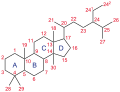 Trimethyl steroid nomenclature


Advertise on WikiMD — 81,000+ full articles, ~900,000 total pages, ~250 million page views. Global reach, limited time promotional rates from $1/page/day. Learn more · View stats

Medical Disclaimer: WikiMD is for informational purposes only and is not a substitute for professional medical advice. Content may be inaccurate or outdated and should not be used for diagnosis or treatment. Always consult your healthcare provider for medical decisions. Verify information with trusted sources such as CDC.gov and NIH.gov. By using this site, you agree that WikiMD is not liable for any outcomes related to its content. See full disclaimer.
Credits:Most images are courtesy of Wikimedia commons, and templates, categories Wikipedia, licensed under CC BY SA or similar.
Translate page: - East Asian
中文,
日本,
한국어,
South Asian
हिन्दी,
தமிழ்,
తెలుగు,
Urdu,
ಕನ್ನಡ,
Southeast Asian
Indonesian,
Vietnamese,
Thai,
မြန်မာဘာသာ,
বাংলা
European
español,
Deutsch,
français,
Greek,
português do Brasil,
polski,
română,
русский,
Nederlands,
norsk,
svenska,
suomi,
Italian
Middle Eastern & African
عربى,
Turkish,
Persian,
Hebrew,
Afrikaans,
isiZulu,
Kiswahili,
Other
Bulgarian,
Hungarian,
Czech,
Swedish,
മലയാളം,
मराठी,
ਪੰਜਾਬੀ,
ગુજરાતી,
Portuguese,
Ukrainian

