List of Japanese snacks
Japanese snacks, known as Oyatsu, are a significant part of Japanese cuisine and culture. They come in a wide variety of flavors and forms, from sweet to savory, and from traditional to modern. This article provides a comprehensive list of popular Japanese snacks.
Traditional Snacks[edit]
Senbei[edit]
Senbei are traditional Japanese rice crackers. They are often flavored with soy sauce and are typically enjoyed with green tea.
Dango[edit]
Dango is a type of Japanese dumpling made from rice flour. It is often served on a skewer and comes in many flavors, such as red bean, green tea, and sesame.
Mochi[edit]
Mochi is a Japanese rice cake made of mochigome, a short-grain japonica glutinous rice. It is traditionally consumed during the Japanese New Year and other special occasions.
Wagashi[edit]
Wagashi are traditional Japanese confections typically made from plant ingredients. They are often served with tea, especially during a traditional Japanese tea ceremony.
Modern Snacks[edit]
Pocky[edit]
Pocky is a popular snack food produced by Ezaki Glico. It consists of a biscuit stick coated with chocolate.
Japanese Kit Kat[edit]
Japanese Kit Kats are known for their wide variety of unique flavors, including matcha, sakura, and wasabi.
Hi-Chew[edit]
Hi-Chew is a chewy candy produced by Morinaga & Company. It comes in a variety of fruit flavors.
Calbee Products[edit]
Calbee Inc. is a major Japanese snack food maker, known for their potato chips and shrimp flavored chips, among others.
See Also[edit]
|
This article is part of the series |
|
Japanese cuisine |
|---|
|
Regional cuisines |
|
Ingredients |
|
Preparation and cooking |
|
Utensils |
|
Rituals and festivals |
|
|
This is a non-exhaustive food and drink related list.

List of Japanese snacks[edit]
-
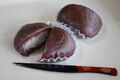 Botamochi and Ohagi
 -
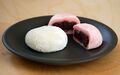 Daifuku
 -
 Ichigo Daifuku
 -
 Dorayaki
 -
 Imagawayaki
 -
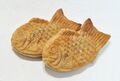 Taiyaki
 -
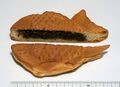 Taiyaki - cut section
 -
 Kurimushi Youkan


Medical Disclaimer: WikiMD is for informational purposes only and is not a substitute for professional medical advice. Content may be inaccurate or outdated and should not be used for diagnosis or treatment. Always consult your healthcare provider for medical decisions. Verify information with trusted sources such as CDC.gov and NIH.gov. By using this site, you agree that WikiMD is not liable for any outcomes related to its content. See full disclaimer.
Credits:Most images are courtesy of Wikimedia commons, and templates, categories Wikipedia, licensed under CC BY SA or similar.
Translate page: - East Asian
中文,
日本,
한국어,
South Asian
हिन्दी,
தமிழ்,
తెలుగు,
Urdu,
ಕನ್ನಡ,
Southeast Asian
Indonesian,
Vietnamese,
Thai,
မြန်မာဘာသာ,
বাংলা
European
español,
Deutsch,
français,
Greek,
português do Brasil,
polski,
română,
русский,
Nederlands,
norsk,
svenska,
suomi,
Italian
Middle Eastern & African
عربى,
Turkish,
Persian,
Hebrew,
Afrikaans,
isiZulu,
Kiswahili,
Other
Bulgarian,
Hungarian,
Czech,
Swedish,
മലയാളം,
मराठी,
ਪੰਜਾਬੀ,
ગુજરાતી,
Portuguese,
Ukrainian

