Liquid breathing
Liquid Breathing
Liquid breathing is a technique that involves replacing the air in the lungs with a breathable liquid. This innovative approach has gained attention in various fields, including medicine, deep-sea diving, and space exploration. By using a liquid medium instead of air, liquid breathing offers several potential benefits and applications.
History[edit]
The concept of liquid breathing dates back to the early 20th century when scientists began exploring the idea of using liquid as a medium for respiration. In 1929, J.S. Haldane proposed the idea of using a liquid to support respiration in a paper titled "Liquid Breathing and the Problem of Respiration." However, it wasn't until the 1960s that significant progress was made in this field.
Physiology[edit]
Liquid breathing works by filling the lungs with a breathable liquid that can carry oxygen and remove carbon dioxide. Perfluorocarbons (PFCs) are commonly used as the liquid medium due to their ability to dissolve large amounts of oxygen and carbon dioxide. When a person breathes in the liquid, it fills the alveoli in the lungs, allowing gas exchange to occur.
Applications[edit]
Medicine[edit]
Liquid breathing has shown potential in various medical applications. One of the most notable areas is the treatment of respiratory distress syndrome (RDS) in premature infants. By using liquid breathing, doctors can provide oxygen to the underdeveloped lungs of premature babies, improving their chances of survival.
Another medical application of liquid breathing is in the field of organ transplantation. By using liquid ventilation during the transportation of organs, the preservation and viability of the organs can be enhanced, increasing the success rates of transplantation procedures.
Deep-Sea Diving[edit]
Liquid breathing has also been explored as a potential solution for deep-sea diving. By using a liquid medium instead of compressed air, divers can avoid the risks associated with decompression sickness. The liquid medium also provides better thermal conductivity, allowing divers to withstand extreme temperatures underwater.
Space Exploration[edit]
In the context of space exploration, liquid breathing has been considered as a way to overcome the limitations of traditional gas-based life support systems. By using a liquid medium, astronauts could potentially stay underwater for extended periods, reducing the need for frequent resupply missions. Additionally, liquid breathing could provide better protection against the harmful effects of radiation in space.
Challenges and Limitations[edit]
While liquid breathing holds promise, there are several challenges and limitations that need to be addressed. One major challenge is the development of suitable liquid breathing apparatus that can deliver and remove the liquid efficiently. Additionally, the potential side effects and long-term effects of prolonged liquid breathing on the human body are still not fully understood.
Conclusion[edit]
Liquid breathing is a fascinating concept with numerous potential applications. From medical treatments to deep-sea diving and space exploration, this technique offers exciting possibilities for the future. However, further research and development are needed to overcome the challenges and fully unlock the potential of liquid breathing.
See Also[edit]
- Respiratory Distress Syndrome
- Decompression Sickness
- Organ Transplantation
- Space Exploration
- Perfluorocarbons
References[edit]
Liquid_breathing[edit]
-
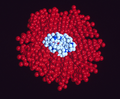 Perflubron and Gentamicin molecules
 -
 FC-75 Molecule
 -
 Perflubron Molecule
 -
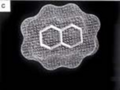 Perfluorodecalin molecule
 -
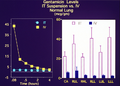 Gentamicin levels


Advertise on WikiMD — 81,000+ full articles, ~900,000 total pages, ~250 million page views. Global reach, limited time promotional rates from $1/page/day. Learn more · View stats

Translate page: - East Asian
中文,
日本,
한국어,
South Asian
हिन्दी,
தமிழ்,
తెలుగు,
Urdu,
ಕನ್ನಡ,
Southeast Asian
Indonesian,
Vietnamese,
Thai,
မြန်မာဘာသာ,
বাংলা
European
español,
Deutsch,
français,
Greek,
português do Brasil,
polski,
română,
русский,
Nederlands,
norsk,
svenska,
suomi,
Italian
Middle Eastern & African
عربى,
Turkish,
Persian,
Hebrew,
Afrikaans,
isiZulu,
Kiswahili,
Other
Bulgarian,
Hungarian,
Czech,
Swedish,
മലയാളം,
मराठी,
ਪੰਜਾਬੀ,
ગુજરાતી,
Portuguese,
Ukrainian
About WikiMD • Contact • Disclaimer • Privacy • Copyright • Site statistics
Some content and images may originate from Wikimedia Commons or Wikipedia and remain subject to their stated licenses. Unless otherwise noted, eligible WikiMD content is available under CC BY-SA 4.0.
WikiMD Wellnesspedia — Free health & wellness information for patients, students, and health professionals.

