Kopytka
Kopytka are a traditional Polish dish, similar to Italian gnocchi. The name 'kopytka' translates to 'little hooves', which refers to the shape of the dumplings, resembling small animal hooves.
History[edit]
The origins of kopytka are rooted in Polish culinary traditions. They were a common dish in the rural areas of Poland, where economical and filling meals were necessary. The simplicity of the ingredients - mainly potatoes and flour - made kopytka a popular choice.
Preparation[edit]
Kopytka are made by combining mashed potatoes with flour, an egg, and sometimes onions or cheese. The dough is then rolled out and cut into small, hoof-shaped pieces. These are boiled until they float to the surface, indicating they are cooked.
Kopytka can be served as a main dish or a side dish. They are often served with a variety of accompaniments, such as sauerkraut, mushrooms, or meat. They can also be served sweet, with sugar, fruit compote, or cinnamon.
Variations[edit]
There are several regional variations of kopytka. In some regions, they are made without potatoes, using only flour and eggs. Other variations include the addition of cottage cheese, buckwheat groats, or sauerkraut.
Cultural Significance[edit]
Kopytka hold a significant place in Polish culinary culture. They are often made for special occasions and family gatherings. They are also a popular dish in Polish restaurants, both in Poland and abroad.
See Also[edit]
This Poland-food related article is a stub. You can help WikiMD by expanding it.

-
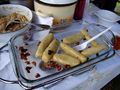 Kopytka
 -
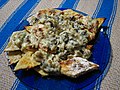 Kopytka
 -
 Kopytka in creamy mushroom sauce


Medical Disclaimer: WikiMD is for informational purposes only and is not a substitute for professional medical advice. Content may be inaccurate or outdated and should not be used for diagnosis or treatment. Always consult your healthcare provider for medical decisions. Verify information with trusted sources such as CDC.gov and NIH.gov. By using this site, you agree that WikiMD is not liable for any outcomes related to its content. See full disclaimer.
Credits:Most images are courtesy of Wikimedia commons, and templates, categories Wikipedia, licensed under CC BY SA or similar.
Translate page: - East Asian
中文,
日本,
한국어,
South Asian
हिन्दी,
தமிழ்,
తెలుగు,
Urdu,
ಕನ್ನಡ,
Southeast Asian
Indonesian,
Vietnamese,
Thai,
မြန်မာဘာသာ,
বাংলা
European
español,
Deutsch,
français,
Greek,
português do Brasil,
polski,
română,
русский,
Nederlands,
norsk,
svenska,
suomi,
Italian
Middle Eastern & African
عربى,
Turkish,
Persian,
Hebrew,
Afrikaans,
isiZulu,
Kiswahili,
Other
Bulgarian,
Hungarian,
Czech,
Swedish,
മലയാളം,
मराठी,
ਪੰਜਾਬੀ,
ગુજરાતી,
Portuguese,
Ukrainian

