Kamaboko
Kamaboko is a type of Japanese processed seafood product that is steamed after being made from ground fish. It is a traditional food in Japan and is commonly consumed as part of a meal or used as an ingredient in various dishes.
History[edit]
The history of Kamaboko dates back to the Heian period, where it was first mentioned in literature. It was originally made from carp, but today, it is made from a variety of white fish. The method of preparation has remained largely unchanged over the centuries, with the fish being ground into a paste, shaped, and then steamed.
Preparation[edit]
The preparation of Kamaboko involves several steps. First, the fish is cleaned and deboned. The flesh is then ground into a paste, which is mixed with salt, sugar, and starch. This mixture is then shaped into a loaf and placed on a wooden board. The board is then placed in a steamer, where the Kamaboko is cooked until it becomes firm.
Varieties[edit]
There are several varieties of Kamaboko, including:
- Chikuwa: A tube-shaped variety of Kamaboko.
- Naruto: A type of Kamaboko with a pink spiral pattern, often used as a topping for ramen.
- Satsuma-age: A fried version of Kamaboko, originating from Kagoshima Prefecture.
Consumption[edit]
Kamaboko is often consumed as part of a meal in Japan, either as a side dish or as an ingredient in other dishes. It is also commonly used in bento boxes. In addition to being eaten in its original form, Kamaboko can also be grilled, fried, or used in soups.
Cultural significance[edit]
Kamaboko has a significant cultural role in Japan. It is often used in celebrations and is considered a symbol of good luck. It is particularly associated with the New Year's celebration, where it is included in Osechi, the traditional New Year's meal.
See also[edit]

Kamaboko[edit]
-
Medieval Kamaboko
-
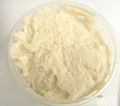 Tub of Surimi
 -
Banshu deep-fried Kamaboko


Medical Disclaimer: WikiMD is for informational purposes only and is not a substitute for professional medical advice. Content may be inaccurate or outdated and should not be used for diagnosis or treatment. Always consult your healthcare provider for medical decisions. Verify information with trusted sources such as CDC.gov and NIH.gov. By using this site, you agree that WikiMD is not liable for any outcomes related to its content. See full disclaimer.
Credits:Most images are courtesy of Wikimedia commons, and templates, categories Wikipedia, licensed under CC BY SA or similar.
Translate page: - East Asian
中文,
日本,
한국어,
South Asian
हिन्दी,
தமிழ்,
తెలుగు,
Urdu,
ಕನ್ನಡ,
Southeast Asian
Indonesian,
Vietnamese,
Thai,
မြန်မာဘာသာ,
বাংলা
European
español,
Deutsch,
français,
Greek,
português do Brasil,
polski,
română,
русский,
Nederlands,
norsk,
svenska,
suomi,
Italian
Middle Eastern & African
عربى,
Turkish,
Persian,
Hebrew,
Afrikaans,
isiZulu,
Kiswahili,
Other
Bulgarian,
Hungarian,
Czech,
Swedish,
മലയാളം,
मराठी,
ਪੰਜਾਬੀ,
ગુજરાતી,
Portuguese,
Ukrainian


