Chikuwa
Chikuwa is a popular Japanese food item made from fish paste. It is commonly consumed as a snack or used as an ingredient in various dishes. In this article, we will explore the origins, preparation, and culinary uses of chikuwa.
Origins[edit]
Chikuwa has its roots in Japanese cuisine and has been enjoyed for centuries. The name "chikuwa" translates to "bamboo ring" in English, which refers to its distinctive shape. It is believed that chikuwa was first created in the Edo period (1603-1868) and has since become a beloved food in Japan.
Preparation[edit]
Chikuwa is made by mixing fish paste with various seasonings and then shaping it into a cylindrical tube. The fish paste used in chikuwa is typically made from white fish such as cod or pollock. The mixture is then steamed or grilled until it becomes firm and develops a slightly chewy texture.
Culinary Uses[edit]
Chikuwa is a versatile ingredient that can be used in a variety of dishes. It is often sliced and added to soups, such as udon or ramen, to enhance the flavor and provide a satisfying texture. Chikuwa can also be grilled or deep-fried and served as a standalone snack or as part of a larger meal.
In addition to its use in soups and snacks, chikuwa can be incorporated into stir-fries, sushi rolls, and bento boxes. Its mild flavor and unique texture make it a popular choice for adding depth to Japanese dishes.
Health Benefits[edit]
Chikuwa is a low-calorie food that is rich in protein and low in fat. It is also a good source of vitamins and minerals, including vitamin B12 and selenium. However, it is important to note that chikuwa is often processed and may contain additives or preservatives, so it is advisable to consume it in moderation as part of a balanced diet.
See Also[edit]
References[edit]
-
Chikuwa
-
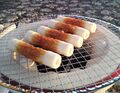 Chikuwa
 -
Making chikuwa
-
Chikuwa salad at izakaya in Kumamoto
-
Chazuke and simmered hijiki seaweed
-
Oden in pot
-
Chikuwa no isobeage
-
Chikuwa
.jpg)

Medical Disclaimer: WikiMD is for informational purposes only and is not a substitute for professional medical advice. Content may be inaccurate or outdated and should not be used for diagnosis or treatment. Always consult your healthcare provider for medical decisions. Verify information with trusted sources such as CDC.gov and NIH.gov. By using this site, you agree that WikiMD is not liable for any outcomes related to its content. See full disclaimer.
Credits:Most images are courtesy of Wikimedia commons, and templates, categories Wikipedia, licensed under CC BY SA or similar.
Translate page: - East Asian
中文,
日本,
한국어,
South Asian
हिन्दी,
தமிழ்,
తెలుగు,
Urdu,
ಕನ್ನಡ,
Southeast Asian
Indonesian,
Vietnamese,
Thai,
မြန်မာဘာသာ,
বাংলা
European
español,
Deutsch,
français,
Greek,
português do Brasil,
polski,
română,
русский,
Nederlands,
norsk,
svenska,
suomi,
Italian
Middle Eastern & African
عربى,
Turkish,
Persian,
Hebrew,
Afrikaans,
isiZulu,
Kiswahili,
Other
Bulgarian,
Hungarian,
Czech,
Swedish,
മലയാളം,
मराठी,
ਪੰਜਾਬੀ,
ગુજરાતી,
Portuguese,
Ukrainian


.jpg)


.jpg)

.jpg)