Kaldereta
Kaldereta is a popular Filipino dish that is traditionally made with goat meat, but can also be prepared with beef, chicken, or pork. The dish is characterized by its rich, spicy tomato sauce, which is flavored with liver spread or liver paste, and includes vegetables such as potatoes, carrots, and bell peppers. The name "Kaldereta" comes from the Spanish word "caldereta", which means "cauldron" or "large cooking pot".
History[edit]
Kaldereta has its roots in the culinary traditions of the Spanish, who colonized the Philippines for over 300 years. The dish is similar to Spanish stews such as menudo and afritada, but is distinguished by its use of liver spread or liver paste, which gives the sauce a unique, rich flavor.
Preparation[edit]
To prepare Kaldereta, the meat is first marinated in soy sauce and garlic, then browned in oil. The vegetables are sautéed in the same pan, then the meat is returned to the pan along with the tomato sauce, liver spread or paste, and a variety of spices. The dish is simmered until the meat is tender and the flavors are well combined. Some variations of the recipe also include peanut butter to thicken the sauce and add a subtle sweetness.
Cultural Significance[edit]
Kaldereta is often served at special occasions and gatherings in the Philippines, such as fiestas, birthdays, and family reunions. It is considered a celebratory dish, and is often paired with rice and other Filipino favorites like adobo and pancit.
Variations[edit]
There are many regional variations of Kaldereta throughout the Philippines. In the northern region of Ilocos, for example, Kaldereta is often made with goat meat and flavored with fermented fish sauce. In the southern region of Mindanao, on the other hand, the dish is often made with beef and includes coconut milk for a richer, creamier sauce.

-
 Home cooked Kaldereta
 -
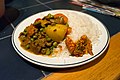 Beef Caldereta
 -
 Kaldereta beef
 -
 Kaldereta Bulalo


Medical Disclaimer: WikiMD is for informational purposes only and is not a substitute for professional medical advice. Content may be inaccurate or outdated and should not be used for diagnosis or treatment. Always consult your healthcare provider for medical decisions. Verify information with trusted sources such as CDC.gov and NIH.gov. By using this site, you agree that WikiMD is not liable for any outcomes related to its content. See full disclaimer.
Credits:Most images are courtesy of Wikimedia commons, and templates, categories Wikipedia, licensed under CC BY SA or similar.
Translate page: - East Asian
中文,
日本,
한국어,
South Asian
हिन्दी,
தமிழ்,
తెలుగు,
Urdu,
ಕನ್ನಡ,
Southeast Asian
Indonesian,
Vietnamese,
Thai,
မြန်မာဘာသာ,
বাংলা
European
español,
Deutsch,
français,
Greek,
português do Brasil,
polski,
română,
русский,
Nederlands,
norsk,
svenska,
suomi,
Italian
Middle Eastern & African
عربى,
Turkish,
Persian,
Hebrew,
Afrikaans,
isiZulu,
Kiswahili,
Other
Bulgarian,
Hungarian,
Czech,
Swedish,
മലയാളം,
मराठी,
ਪੰਜਾਬੀ,
ગુજરાતી,
Portuguese,
Ukrainian

