Islamic Golden Age
Islamic Golden Age refers to a period in the history of Islam, traditionally dated from the 8th century to the 14th century, during which much of the historically Islamic world was ruled by various caliphates and science, economic development, and cultural works flourished. This period is traditionally understood to have begun during the reign of the Abbasid caliph Harun al-Rashid (786 to 809) with the inauguration of the House of Wisdom in Baghdad, where scholars from various parts of the world with different cultural backgrounds were mandated to gather and translate all of the world's classical knowledge into the Arabic language.
Origins[edit]
The Islamic Golden Age is traditionally dated from the mid-7th century to the mid-13th century at which Muslim rulers established one of the largest empires in history. During this period, artists, engineers, scholars, poets, philosophers, geographers and traders in the Islamic world contributed to agriculture, the arts, economics, industry, law, literature, navigation, philosophy, sciences, sociology, and technology, both by preserving earlier traditions and by adding inventions and innovations of their own.
Achievements[edit]
The Islamic Golden Age witnessed a fundamental transformation in agriculture known as the "Arab Agricultural Revolution". Muslims invented several technical innovations which were previously unknown in Europe, including the windmill, water clock, and astrolabe, among others. The Islamic world also influenced other aspects of medieval European culture, notably the Spanish language and architecture.
In the field of mathematics, the Islamic scholars played a significant role. They developed algebra, introduced the concept of algorithm and made significant contributions to geometry and trigonometry.
In medicine, scholars such as Avicenna and Al-Razi made significant advancements. Avicenna's The Canon of Medicine was a standard medical text in Europe for centuries. Al-Razi was one of the pioneers in the field of ophthalmology.
Decline[edit]
The traditional end of the Islamic Golden Age is the Mongol sack of Baghdad in 1258. The invasion led to a decline in the cultural and scientific development in the Muslim world. However, the Islamic civilization continued to exist, even after the end of the Golden Age, through the Ottoman Empire and to some extent to the present day.
See also[edit]

 | This Islam-related article is a stub. You can help WikiMD by expanding the page. |
 | This This Middle Ages-related article is a stub. You can help WikiMD by expanding the page. |
-
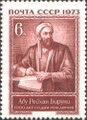 Islamic Golden Age
 -
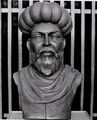 Islamic Golden Age
 -
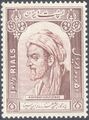 Islamic Golden Age
 -
 Islamic Golden Age


Medical Disclaimer: WikiMD is for informational purposes only and is not a substitute for professional medical advice. Content may be inaccurate or outdated and should not be used for diagnosis or treatment. Always consult your healthcare provider for medical decisions. Verify information with trusted sources such as CDC.gov and NIH.gov. By using this site, you agree that WikiMD is not liable for any outcomes related to its content. See full disclaimer.
Credits:Most images are courtesy of Wikimedia commons, and templates, categories Wikipedia, licensed under CC BY SA or similar.
Translate page: - East Asian
中文,
日本,
한국어,
South Asian
हिन्दी,
தமிழ்,
తెలుగు,
Urdu,
ಕನ್ನಡ,
Southeast Asian
Indonesian,
Vietnamese,
Thai,
မြန်မာဘာသာ,
বাংলা
European
español,
Deutsch,
français,
Greek,
português do Brasil,
polski,
română,
русский,
Nederlands,
norsk,
svenska,
suomi,
Italian
Middle Eastern & African
عربى,
Turkish,
Persian,
Hebrew,
Afrikaans,
isiZulu,
Kiswahili,
Other
Bulgarian,
Hungarian,
Czech,
Swedish,
മലയാളം,
मराठी,
ਪੰਜਾਬੀ,
ગુજરાતી,
Portuguese,
Ukrainian

