Intriptyline
Intriptyline is a tricyclic antidepressant (TCA) that was developed in the 1960s but was never marketed. It is similar in structure to other TCAs such as amitriptyline and imipramine.
History[edit]
Intriptyline was first synthesized in the 1960s as part of a series of TCAs. Despite showing promise in early trials, it was never brought to market. The reasons for this are unclear, but may be related to the development of newer, more effective antidepressants.
Pharmacology[edit]
Like other TCAs, intriptyline works by inhibiting the reuptake of certain neurotransmitters, specifically norepinephrine and serotonin. This increases the concentration of these neurotransmitters in the brain, which can help to alleviate symptoms of depression.
Intriptyline also has anticholinergic effects, which can lead to side effects such as dry mouth, constipation, and blurred vision. However, these effects are generally less severe than those of other TCAs.
Clinical Use[edit]
While intriptyline is not currently used in clinical practice, research into its potential uses continues. Some studies have suggested that it may be effective in treating conditions such as chronic pain, insomnia, and certain types of anxiety disorders.
Side Effects[edit]
As with other TCAs, intriptyline can cause a number of side effects. These can include dizziness, drowsiness, dry mouth, constipation, and blurred vision. In rare cases, it can also cause more serious side effects such as arrhythmias or orthostatic hypotension.
See Also[edit]
References[edit]

Intriptyline[edit]
-
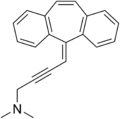 Intriptyline
 -
Intriptyline 3D Spacefill


Medical Disclaimer: WikiMD is for informational purposes only and is not a substitute for professional medical advice. Content may be inaccurate or outdated and should not be used for diagnosis or treatment. Always consult your healthcare provider for medical decisions. Verify information with trusted sources such as CDC.gov and NIH.gov. By using this site, you agree that WikiMD is not liable for any outcomes related to its content. See full disclaimer.
Credits:Most images are courtesy of Wikimedia commons, and templates, categories Wikipedia, licensed under CC BY SA or similar.
Translate page: - East Asian
中文,
日本,
한국어,
South Asian
हिन्दी,
தமிழ்,
తెలుగు,
Urdu,
ಕನ್ನಡ,
Southeast Asian
Indonesian,
Vietnamese,
Thai,
မြန်မာဘာသာ,
বাংলা
European
español,
Deutsch,
français,
Greek,
português do Brasil,
polski,
română,
русский,
Nederlands,
norsk,
svenska,
suomi,
Italian
Middle Eastern & African
عربى,
Turkish,
Persian,
Hebrew,
Afrikaans,
isiZulu,
Kiswahili,
Other
Bulgarian,
Hungarian,
Czech,
Swedish,
മലയാളം,
मराठी,
ਪੰਜਾਬੀ,
ગુજરાતી,
Portuguese,
Ukrainian


