Indoor air quality
Indoor Air Quality (IAQ) refers to the air quality within and around buildings and structures, especially as it relates to the health and comfort of building occupants. Understanding and controlling common pollutants indoors can help reduce your risk of indoor health concerns.
Health Effects[edit]
Exposure to indoor air pollutants can lead to a variety of health effects, from immediate physical symptoms such as headache, dizziness, fatigue, and allergic reactions, to long-term health conditions such as respiratory diseases, heart disease, and cancer. The type and severity of health effects depend on several factors including the type of pollutant, the duration of exposure, and the individual's health status and genetics.
Sources of Indoor Air Pollution[edit]
Indoor air pollution can come from a variety of sources inside a building. These include combustion sources such as oil, gas, kerosene, coal, wood, and tobacco products; building materials and furnishings; household cleaning and maintenance products; central heating and cooling systems; and outdoor sources such as radon, pesticides, and outdoor air pollution.
Improving Indoor Air Quality[edit]
There are several strategies to improve indoor air quality. These include source control, improved ventilation, and air cleaners. Source control involves removing the sources of pollution or reducing their emissions; this is generally the most effective strategy. Improved ventilation increases the amount of outdoor air coming indoors, and air cleaners can remove some of the particles and gases from indoor air.
Indoor Air Quality and COVID-19[edit]
The COVID-19 pandemic has brought increased attention to the importance of indoor air quality. The virus that causes COVID-19 is primarily spread through respiratory droplets, and can be spread through the air in enclosed spaces. Good ventilation, along with other preventive measures such as wearing masks and social distancing, can help reduce the risk of spreading COVID-19 indoors.
See Also[edit]
 | This environment-related article is a stub. You can help WikiMD by expanding the page. |
-
 Indoor air quality
 -
 Share of deaths from indoor air pollution
 -
 Indoor air quality
 -
 Airborne microbes
 -
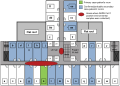 SARS 2003 outbreak layout
 -
 Spider plant blades
 -
 Eliminate triggers


_Airborne_microbes.jpg)


.jpg)
Advertise on WikiMD — 81,000+ full articles, ~900,000 total pages, ~250 million page views. Global reach, limited time promotional rates from $1/page/day. Learn more · View stats

Translate page: - East Asian
中文,
日本,
한국어,
South Asian
हिन्दी,
தமிழ்,
తెలుగు,
Urdu,
ಕನ್ನಡ,
Southeast Asian
Indonesian,
Vietnamese,
Thai,
မြန်မာဘာသာ,
বাংলা
European
español,
Deutsch,
français,
Greek,
português do Brasil,
polski,
română,
русский,
Nederlands,
norsk,
svenska,
suomi,
Italian
Middle Eastern & African
عربى,
Turkish,
Persian,
Hebrew,
Afrikaans,
isiZulu,
Kiswahili,
Other
Bulgarian,
Hungarian,
Czech,
Swedish,
മലയാളം,
मराठी,
ਪੰਜਾਬੀ,
ગુજરાતી,
Portuguese,
Ukrainian
About WikiMD • Contact • Disclaimer • Privacy • Copyright • Site statistics
Some content and images may originate from Wikimedia Commons or Wikipedia and remain subject to their stated licenses. Unless otherwise noted, eligible WikiMD content is available under CC BY-SA 4.0.
WikiMD Wellnesspedia — Free health & wellness information for patients, students, and health professionals.

