History of Tay–Sachs disease
History of Tay–Sachs disease is a topic that covers the historical development and understanding of Tay–Sachs disease, a rare and usually fatal genetic disorder that progressively destroys nerve cells (neurons) in the brain and spinal cord.
Early History[edit]
The earliest known description of a possible Tay–Sachs disease case was by British ophthalmologist Warren Tay in 1881. He described a patient with a cherry-red spot on the retina of the eye. However, it was not until 1887 that the disease was more fully described by American neurologist Bernard Sachs, who noted the cellular changes in the brain of Tay–Sachs patients and observed the familial nature of the disease.
20th Century Developments[edit]
In the 20th century, the understanding of Tay–Sachs disease advanced significantly. In 1933, the first biochemical test for Tay–Sachs was developed, allowing for more accurate diagnosis. In the 1960s, the enzyme deficiency responsible for Tay–Sachs was discovered, and in 1985, the gene mutation causing the disease was identified.
Modern Understanding and Research[edit]
Today, Tay–Sachs disease is understood to be caused by a mutation in the HEXA gene. This gene provides instructions for producing an enzyme that plays a critical role in the brain and spinal cord. Without this enzyme, a fatty substance accumulates to toxic levels in the patient's neurons, leading to the symptoms of Tay–Sachs.
Research into Tay–Sachs disease continues, with scientists exploring potential treatments such as enzyme replacement therapy, substrate reduction therapy, and gene therapy. Prenatal testing and carrier screening for Tay–Sachs disease are also available, helping to reduce the incidence of the disease.
See Also[edit]
References[edit]

This WikiMD article can only be edited by registered and verified editors. You can log in or register.
-
 Bernard Sachs, neurologist who described the disease
 -
 Logo of the Eugenics Congress
 -
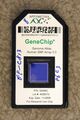 Affymetrix 5.0 microarray used in genetic testing


Advertise on WikiMD — 81,000+ full articles, ~900,000 total pages, ~250 million page views. Global reach, limited time promotional rates from $1/page/day. Learn more · View stats


Translate page: - East Asian
中文,
日本,
한국어,
South Asian
हिन्दी,
தமிழ்,
తెలుగు,
Urdu,
ಕನ್ನಡ,
Southeast Asian
Indonesian,
Vietnamese,
Thai,
မြန်မာဘာသာ,
বাংলা
European
español,
Deutsch,
français,
Greek,
português do Brasil,
polski,
română,
русский,
Nederlands,
norsk,
svenska,
suomi,
Italian
Middle Eastern & African
عربى,
Turkish,
Persian,
Hebrew,
Afrikaans,
isiZulu,
Kiswahili,
Other
Bulgarian,
Hungarian,
Czech,
Swedish,
മലയാളം,
मराठी,
ਪੰਜਾਬੀ,
ગુજરાતી,
Portuguese,
Ukrainian
About WikiMD • Contact • Disclaimer • Privacy • Copyright • Site statistics
Some content and images may originate from Wikimedia Commons or Wikipedia and remain subject to their stated licenses. Unless otherwise noted, eligible WikiMD content is available under CC BY-SA 4.0.
WikiMD Wellnesspedia — Free health & wellness information for patients, students, and health professionals.

