Fish stew
Fish stew is a warm dish made primarily from fish or seafood, and often includes other ingredients such as vegetables, herbs, and spices. It is a popular dish in many cultures around the world, with variations including the French bouillabaisse, the Italian cioppino, and the Spanish caldeirada.
Ingredients[edit]
Fish stew typically includes a variety of fish and seafood, such as cod, salmon, shrimp, and clams. The specific types of fish and seafood used can vary depending on the recipe and the region where the stew is being made. Other common ingredients include vegetables like onions, garlic, tomatoes, and potatoes, as well as herbs and spices like parsley, thyme, bay leaves, and paprika.
Preparation[edit]
The preparation of fish stew often involves first sautéing the vegetables and spices, then adding the fish and seafood, and finally simmering everything together in a broth or stock. Some recipes may also include wine or beer for additional flavor. The stew is typically served hot, often with bread on the side for dipping.
Variations[edit]
There are many variations of fish stew around the world. For example, bouillabaisse is a traditional French fish stew that includes a variety of fish and shellfish, as well as saffron and orange peel. Cioppino is an Italian-American version that originated in San Francisco and typically includes a mix of fish, clams, shrimp, scallops, squid, mussels, and crab in a tomato-based broth. Caldeirada is a Portuguese fish stew made with a variety of fish and shellfish, potatoes, tomatoes, and onions.
Health Benefits[edit]
Fish stew can be a healthy dish, as fish and seafood are high in protein and omega-3 fatty acids, which are beneficial for heart health. The vegetables in the stew also provide a variety of vitamins and minerals. However, the nutritional content can vary depending on the specific ingredients used.
See Also[edit]

This WikiMD article can only be edited by registered and verified editors. You can log in or register.
-
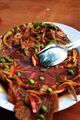 Gurame Asam Pedas
 -
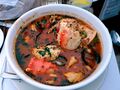 Cioppino
 -
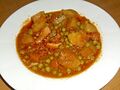 Buridda di Seppie
 -
Cacciucco
-
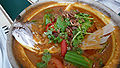 Fish Head Curry
 -
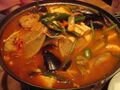 Dongtae Jjigae


Sponsored Health Resource

W8MD Weight Loss, Sleep & MedSpa
Looking for physician-supervised weight loss, semaglutide, tirzepatide, or GLP-1 receptor agonist options? W8MD helps eligible patients in New York City, Brooklyn, New Jersey, Connecticut, Pennsylvania, Delaware, and greater Philadelphia with medical weight loss, sleep medicine, and long-term maintenance support.
GLP-1 specials: Affordable GLP-1 injections NYC and Philadelphia starting from $29.99/week and up for semaglutide with insurance accepted for qualifying visits, and $45/week and up for tirzepatide with insurance accepted for qualifying visits. Self-pay options start from $59.99/week and up for semaglutide and $69.99/week and up for tirzepatide.
Medical weight loss NYC | Affordable GLP-1 injections NYC | Budget GLP-1 weight loss shots Philadelphia | New Jersey medical weight loss | NYC medical weight loss | Philadelphia medical weight loss | Sleep clinic NYC | W8MD's Philadelphia GLP-1 doctor | Weight loss prescriptions NYC
Book a W8MD appointment · View GLP-1 specials
Paid promotional message. Eligibility, pricing, insurance coverage, medication availability, and results vary. Medical evaluation required.

Medical Disclaimer: WikiMD is for informational purposes only and is not a substitute for professional medical advice. Content may be inaccurate or outdated and should not be used for diagnosis or treatment. Always consult your healthcare provider for medical decisions. Verify information with trusted sources such as CDC.gov and NIH.gov. By using this site, you agree that WikiMD is not liable for any outcomes related to its content. See full disclaimer.
Credits:Most images are courtesy of Wikimedia commons, and templates, categories Wikipedia, licensed under CC BY SA or similar.
Translate page: - East Asian
中文,
日本,
한국어,
South Asian
हिन्दी,
தமிழ்,
తెలుగు,
Urdu,
ಕನ್ನಡ,
Southeast Asian
Indonesian,
Vietnamese,
Thai,
မြန်မာဘာသာ,
বাংলা
European
español,
Deutsch,
français,
Greek,
português do Brasil,
polski,
română,
русский,
Nederlands,
norsk,
svenska,
suomi,
Italian
Middle Eastern & African
عربى,
Turkish,
Persian,
Hebrew,
Afrikaans,
isiZulu,
Kiswahili,
Other
Bulgarian,
Hungarian,
Czech,
Swedish,
മലയാളം,
मराठी,
ਪੰਜਾਬੀ,
ગુજરાતી,
Portuguese,
Ukrainian


