Fish preservation
Fish preservation refers to the methods and processes used to extend the shelf life of fish and fish products. It involves techniques such as canning, smoking, drying, fermentation, and freezing. These methods prevent the growth of microorganisms, slow down the oxidation of fats which cause rancidity, and delay the natural enzymatic breakdown of the fish.
History[edit]
The practice of fish preservation has been integral to every culture and civilization that has relied on fish as a food source. The earliest form of fish preservation was likely air drying in the sun and wind, or smoking over a fire.
Methods[edit]
Drying[edit]
Drying is one of the oldest methods of fish preservation. It involves the removal of water from the fish tissue, which inhibits the growth of spoilage microorganisms.
Smoking[edit]
Smoking is another traditional method of fish preservation. It involves exposing the fish to smoke from burning or smoldering plant materials, usually wood.
Canning[edit]
Canning is a method of preservation that involves processing the fish in a sealed container at a high temperature.
Freezing[edit]
Freezing is a modern method of fish preservation. It involves lowering the temperature of the fish to below its freezing point, which slows down the enzymatic activity and growth of microorganisms.
Fermentation[edit]
Fermentation is a method of fish preservation that involves the breakdown of fish tissues by bacteria, yeasts, and molds.
Health and safety[edit]
Fish preservation methods must be carried out properly to ensure the safety and quality of the preserved fish. Improper preservation can lead to the growth of harmful bacteria or the production of toxins.
See also[edit]

-
 Fish preservation
 -
 Fish preservation
 -
 Fish preservation
 -
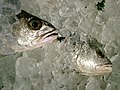 Fish preservation
 -
 Fish preservation
 -
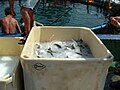 Fish preservation
 -
 Fish preservation
 -
 Fish preservation
 -
 Fish preservation
 -
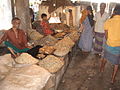 Fish preservation
 -
 Fish preservation
 -
 Fish preservation


Medical Disclaimer: WikiMD is for informational purposes only and is not a substitute for professional medical advice. Content may be inaccurate or outdated and should not be used for diagnosis or treatment. Always consult your healthcare provider for medical decisions. Verify information with trusted sources such as CDC.gov and NIH.gov. By using this site, you agree that WikiMD is not liable for any outcomes related to its content. See full disclaimer.
Credits:Most images are courtesy of Wikimedia commons, and templates, categories Wikipedia, licensed under CC BY SA or similar.
Translate this page: - East Asian
中文,
日本,
한국어,
South Asian
हिन्दी,
தமிழ்,
తెలుగు,
Urdu,
ಕನ್ನಡ,
Southeast Asian
Indonesian,
Vietnamese,
Thai,
မြန်မာဘာသာ,
বাংলা
European
español,
Deutsch,
français,
Greek,
português do Brasil,
polski,
română,
русский,
Nederlands,
norsk,
svenska,
suomi,
Italian
Middle Eastern & African
عربى,
Turkish,
Persian,
Hebrew,
Afrikaans,
isiZulu,
Kiswahili,
Other
Bulgarian,
Hungarian,
Czech,
Swedish,
മലയാളം,
मराठी,
ਪੰਜਾਬੀ,
ગુજરાતી,
Portuguese,
Ukrainian
