Ethylsarin
Ethylsarin (also known as O-Ethyl S-Methylphosphonothioate) is a chemical compound and a nerve gas that is considered a weapon of mass destruction. It is a variant of the deadly nerve gas sarin, but with an ethyl group replacing the isopropyl group.
Chemical Structure and Properties[edit]
Ethylsarin has the chemical formula C_5H_12FO_2PS. It is a colorless, odorless liquid that is soluble in water and organic solvents. The compound is highly toxic and can be lethal in small amounts. It works by inhibiting the action of acetylcholinesterase, an enzyme that breaks down acetylcholine, a neurotransmitter in the nervous system. This leads to an accumulation of acetylcholine, causing overstimulation of muscles and glands, which can result in symptoms such as convulsions, paralysis, respiratory failure, and death.
Synthesis[edit]
The synthesis of ethylsarin involves the reaction of methylphosphonyl difluoride with ethanol in the presence of a base. This produces ethyl methylphosphonofluoridate, which is then reacted with hydrogen sulfide to produce ethylsarin.
Use and Regulation[edit]
Ethylsarin is classified as a Schedule 1 substance under the Chemical Weapons Convention, which means its production, stockpiling, and use is prohibited for any purpose other than research, medical, pharmaceutical, or protective purposes. It is considered a weapon of mass destruction and its use is a violation of international law.
Health Effects[edit]
Exposure to ethylsarin can cause a range of symptoms, from mild to severe, depending on the amount and route of exposure. Symptoms can include difficulty breathing, blurred vision, vomiting, convulsions, and in severe cases, death. Treatment involves removing the victim from the source of exposure, decontaminating the skin and clothing, and administering antidotes such as atropine and pralidoxime.
See Also[edit]

Ethylsarin gallery[edit]
-
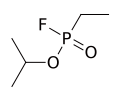 Isopropyl ethylphosphonofluoridate


Medical Disclaimer: WikiMD is for informational purposes only and is not a substitute for professional medical advice. Content may be inaccurate or outdated and should not be used for diagnosis or treatment. Always consult your healthcare provider for medical decisions. Verify information with trusted sources such as CDC.gov and NIH.gov. By using this site, you agree that WikiMD is not liable for any outcomes related to its content. See full disclaimer.
Credits:Most images are courtesy of Wikimedia commons, and templates, categories Wikipedia, licensed under CC BY SA or similar.
Translate page: - East Asian
中文,
日本,
한국어,
South Asian
हिन्दी,
தமிழ்,
తెలుగు,
Urdu,
ಕನ್ನಡ,
Southeast Asian
Indonesian,
Vietnamese,
Thai,
မြန်မာဘာသာ,
বাংলা
European
español,
Deutsch,
français,
Greek,
português do Brasil,
polski,
română,
русский,
Nederlands,
norsk,
svenska,
suomi,
Italian
Middle Eastern & African
عربى,
Turkish,
Persian,
Hebrew,
Afrikaans,
isiZulu,
Kiswahili,
Other
Bulgarian,
Hungarian,
Czech,
Swedish,
മലയാളം,
मराठी,
ਪੰਜਾਬੀ,
ગુજરાતી,
Portuguese,
Ukrainian

