Ernest Lawrence
Ernest Orlando Lawrence (August 8, 1901 – August 27, 1958) was an American nuclear physicist and a pioneer in the field of nuclear physics. He is best known for his invention of the cyclotron, a device that is used to accelerate atomic particles to high velocities, a fundamental technology in the development of atomic bombs, as well as in various applications in medicine and nuclear physics. Lawrence's contributions to physics earned him the Nobel Prize in Physics in 1939, making him one of the most distinguished scientists of his time.
Early Life and Education[edit]
Ernest Lawrence was born in Canton, South Dakota, to Carl Gustavus and Gunda (Jacobson) Lawrence. He showed an early interest in science and mechanics, which was encouraged by his parents. Lawrence attended the University of South Dakota, where he received his Bachelor of Arts degree in chemistry in 1922. He then moved to the University of Minnesota, where he earned his Master's degree in physics in 1923. Lawrence completed his Ph.D. in physics at Yale University in 1925, where his research focused on photoelectric effects and X-rays.
Invention of the Cyclotron[edit]
After completing his doctorate, Lawrence accepted a position at the University of California, Berkeley, where he would spend the majority of his career. It was here, in 1930, that Lawrence invented the cyclotron. The cyclotron was a revolutionary device that could accelerate nuclear particles to high speeds by moving them in a spiral path within a magnetic field. This invention not only opened new avenues in the field of nuclear physics but also had profound implications for medicine, particularly in the treatment of cancer through radiation therapy.
Contributions to the Manhattan Project[edit]
During World War II, Lawrence played a significant role in the Manhattan Project, the United States' effort to develop atomic bombs. He was instrumental in the development of the electromagnetic method for isotope separation, which was critical for obtaining the uranium-235 necessary for the bomb. Lawrence's work on the Manhattan Project highlighted the dual-use nature of nuclear technology, capable of both destructive power and beneficial applications in peace time.
Later Years and Legacy[edit]
After the war, Lawrence continued his work at the University of California, Berkeley, focusing on nuclear physics and advocating for the peaceful use of nuclear energy. He was a key figure in the establishment of the Lawrence Berkeley National Laboratory and the Lawrence Livermore National Laboratory, both of which are named in his honor.
Ernest Lawrence's legacy is marked by his contributions to nuclear physics and his role in the development of the atomic bomb. His work has had a lasting impact on the fields of physics and medicine, demonstrating the profound ways in which scientific discoveries can shape the world.
Lawrence passed away on August 27, 1958, from complications related to ulcerative colitis, leaving behind a legacy of scientific innovation and discovery.
Awards and Honors[edit]
- Nobel Prize in Physics (1939)
- Hughes Medal (1937)
- Enrico Fermi Award (1957)
See Also[edit]
 | This physics-biography article is a stub. You can help WikiMD by expanding the page. |
Ernest Lawrence[edit]
-
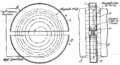 Cyclotron patent
 -
 Lawrence, Compton, Bush, Conant, Compton, Loomis at March 1940 meeting UCB
 -
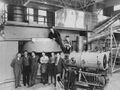 60-inch cyclotron, c. 1930s
 -
 University of California Radiation Laboratory staff on the magnet yoke for the 60-inch cyclotron, 1938
 -
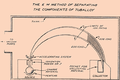 Diagram of uranium isotope separation in the calutron
 -
 Alpha 1 racetrack, Uranium 235 electromagnetic separation plant, Manhattan Project, Y-12 Oak Ridge
 -
 Ernest Lawrence


.jpg)


.jpg)
Sponsored Health Resource

W8MD Weight Loss, Sleep & MedSpa
Looking for physician-supervised weight loss, semaglutide, tirzepatide, or GLP-1 receptor agonist options? W8MD helps eligible patients in New York City, Brooklyn, New Jersey, Connecticut, Pennsylvania, Delaware, and greater Philadelphia with medical weight loss, sleep medicine, and long-term maintenance support.
GLP-1 specials: Affordable GLP-1 injections NYC and Philadelphia starting from $29.99/week and up for semaglutide with insurance accepted for qualifying visits, and $45/week and up for tirzepatide with insurance accepted for qualifying visits. Self-pay options start from $59.99/week and up for semaglutide and $69.99/week and up for tirzepatide.
Medical weight loss NYC | Affordable GLP-1 injections NYC | Budget GLP-1 weight loss shots Philadelphia | New Jersey medical weight loss | NYC medical weight loss | Philadelphia medical weight loss | Sleep clinic NYC | W8MD's Philadelphia GLP-1 doctor | Weight loss prescriptions NYC
Book a W8MD appointment · View GLP-1 specials
Paid promotional message. Eligibility, pricing, insurance coverage, medication availability, and results vary. Medical evaluation required.

Medical Disclaimer: WikiMD is for informational purposes only and is not a substitute for professional medical advice. Content may be inaccurate or outdated and should not be used for diagnosis or treatment. Always consult your healthcare provider for medical decisions. Verify information with trusted sources such as CDC.gov and NIH.gov. By using this site, you agree that WikiMD is not liable for any outcomes related to its content. See full disclaimer.
Credits:Most images are courtesy of Wikimedia commons, and templates, categories Wikipedia, licensed under CC BY SA or similar.
Translate page: - East Asian
中文,
日本,
한국어,
South Asian
हिन्दी,
தமிழ்,
తెలుగు,
Urdu,
ಕನ್ನಡ,
Southeast Asian
Indonesian,
Vietnamese,
Thai,
မြန်မာဘာသာ,
বাংলা
European
español,
Deutsch,
français,
Greek,
português do Brasil,
polski,
română,
русский,
Nederlands,
norsk,
svenska,
suomi,
Italian
Middle Eastern & African
عربى,
Turkish,
Persian,
Hebrew,
Afrikaans,
isiZulu,
Kiswahili,
Other
Bulgarian,
Hungarian,
Czech,
Swedish,
മലയാളം,
मराठी,
ਪੰਜਾਬੀ,
ગુજરાતી,
Portuguese,
Ukrainian

