Isotope separation
Isotope separation is the process of concentrating specific isotopes of a chemical element by removing other isotopes. The use of the nuclides produced is varied. The largest variety is used in research (e.g. in chemistry where isotopes of different masses are used to study reaction mechanisms).
Methods of Isotope Separation[edit]
There are several methods of isotope separation, including:
- Gaseous diffusion: This method uses the difference in speed at which the different isotopes diffuse through a porous barrier.
- Gas centrifuge: This method uses the difference in mass between the isotopes to create a centrifugal force when the isotopes are spun rapidly.
- Electromagnetic separation: This method uses the difference in the mass-to-charge ratio of ions to separate the isotopes.
- Laser isotope separation: This method uses the difference in the absorption spectra of the isotopes to selectively excite and then separate the isotopes.
Applications of Isotope Separation[edit]
Isotope separation has several applications, including:
- Nuclear power: Isotope separation is used to enrich uranium for use in nuclear reactors and nuclear weapons.
- Medicine: Certain isotopes are used in medical imaging and treatment.
- Research: Isotopes are used in various fields of scientific research, including chemistry, physics, and biology.
History of Isotope Separation[edit]
The history of isotope separation dates back to the early 20th century, when scientists first discovered that elements could exist in different isotopic forms. The first successful isotope separation was achieved by John Jacob Livingood and Ernest O. Lawrence in 1934, using a method known as electromagnetic separation.
See Also[edit]

 | This physics-related article is a stub. You can help WikiMD by expanding the page. |
 | This nuclear physics or atomic physics–related article is a stub. You can help WikiMD by expanding the page. |
Isotope_separation[edit]
-
Gaseous diffusion process for isotope separation
-
Gas centrifuge cascade for isotope separation
-
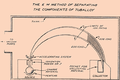 Diagram of uranium isotope separation in the calutron


Medical Disclaimer: WikiMD is for informational purposes only and is not a substitute for professional medical advice. Content may be inaccurate or outdated and should not be used for diagnosis or treatment. Always consult your healthcare provider for medical decisions. Verify information with trusted sources such as CDC.gov and NIH.gov. By using this site, you agree that WikiMD is not liable for any outcomes related to its content. See full disclaimer.
Credits:Most images are courtesy of Wikimedia commons, and templates, categories Wikipedia, licensed under CC BY SA or similar.
Translate page: - East Asian
中文,
日本,
한국어,
South Asian
हिन्दी,
தமிழ்,
తెలుగు,
Urdu,
ಕನ್ನಡ,
Southeast Asian
Indonesian,
Vietnamese,
Thai,
မြန်မာဘာသာ,
বাংলা
European
español,
Deutsch,
français,
Greek,
português do Brasil,
polski,
română,
русский,
Nederlands,
norsk,
svenska,
suomi,
Italian
Middle Eastern & African
عربى,
Turkish,
Persian,
Hebrew,
Afrikaans,
isiZulu,
Kiswahili,
Other
Bulgarian,
Hungarian,
Czech,
Swedish,
മലയാളം,
मराठी,
ਪੰਜਾਬੀ,
ગુજરાતી,
Portuguese,
Ukrainian


_(cropped).jpg)
