Eosinophilic
Eosinophilic refers to the staining characteristics of certain cells or tissues with the dye eosin. Eosin is a red dye that is used to stain cytoplasmic material and collagen pink. The term eosinophilic is also used to refer to cells that are attracted to eosin.
Overview[edit]
Eosinophils are a type of white blood cell that play a key role in the body's immune response. They are involved in the fight against certain infections, and they also play a role in some allergic reactions and in the response to certain diseases.
Function[edit]
Eosinophils are part of the body's immune system. They are involved in the response to certain infections, particularly those caused by parasites. Eosinophils are also involved in some allergic reactions, and they play a role in the response to certain diseases, including asthma and inflammatory bowel disease.
Eosinophilic Disorders[edit]
There are several disorders that are characterized by an abnormally high number of eosinophils in the body. These include Eosinophilic esophagitis, Eosinophilic fasciitis, and Hypereosinophilic syndrome. These conditions can cause a variety of symptoms, depending on which part of the body is affected.
Diagnosis[edit]
The diagnosis of eosinophilic disorders typically involves a blood test to measure the number of eosinophils in the body. In some cases, a tissue biopsy may be needed to confirm the diagnosis.
Treatment[edit]
Treatment for eosinophilic disorders depends on the specific condition and the severity of symptoms. It may include medications to reduce inflammation and control the immune response, as well as other treatments to manage symptoms.
See Also[edit]

This WikiMD article can only be edited by registered and verified editors. You can log in or register.
-
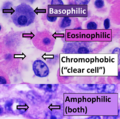 Eosinophilic, basophilic, chromophobic and amphophilic staining
 -
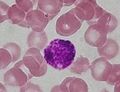 Basophil


Medical Disclaimer: WikiMD is for informational purposes only and is not a substitute for professional medical advice. Content may be inaccurate or outdated and should not be used for diagnosis or treatment. Always consult your healthcare provider for medical decisions. Verify information with trusted sources such as CDC.gov and NIH.gov. By using this site, you agree that WikiMD is not liable for any outcomes related to its content. See full disclaimer.
Credits:Most images are courtesy of Wikimedia commons, and templates, categories Wikipedia, licensed under CC BY SA or similar.
Translate page: - East Asian
中文,
日本,
한국어,
South Asian
हिन्दी,
தமிழ்,
తెలుగు,
Urdu,
ಕನ್ನಡ,
Southeast Asian
Indonesian,
Vietnamese,
Thai,
မြန်မာဘာသာ,
বাংলা
European
español,
Deutsch,
français,
Greek,
português do Brasil,
polski,
română,
русский,
Nederlands,
norsk,
svenska,
suomi,
Italian
Middle Eastern & African
عربى,
Turkish,
Persian,
Hebrew,
Afrikaans,
isiZulu,
Kiswahili,
Other
Bulgarian,
Hungarian,
Czech,
Swedish,
മലയാളം,
मराठी,
ਪੰਜਾਬੀ,
ગુજરાતી,
Portuguese,
Ukrainian

