Electrochemical gradient
Electrochemical gradient is a term used in biology and biochemistry to describe a gradient of electrochemical potential, usually for an ion that can move across a biological membrane. The gradient consists of two parts, the chemical gradient, or difference in solute concentration across a membrane, and the electrical gradient, or difference in charge across a membrane. When there are unequal concentrations of an ion across a membrane, the ion will move across the membrane from the area of higher concentration to the area of lower concentration, following the concentration gradient. This process is known as diffusion.
Chemical Gradient[edit]
The chemical gradient refers to the change in chemical concentration from one point to another. In biological systems, this can be observed in the concentration of a substance in a fluid such as the concentration of potassium ions inside and outside a cell. This difference in concentration can result in movement of substances from an area of high concentration to an area of low concentration, a process known as diffusion.
Electrical Gradient[edit]
The electrical gradient refers to the difference in electrical charge between two locations. When a gradient exists, ions will move from an area of higher charge to an area of lower charge. This movement is influenced by the size of the charge difference and the permeability of the ions to the membrane.
Role in Cellular Function[edit]
Electrochemical gradients play a crucial role in the cell's ability to carry out essential functions. For example, the mitochondria uses the electrochemical gradient of protons across the inner mitochondrial membrane to generate ATP, the cell's main source of energy. This process is known as oxidative phosphorylation.
See Also[edit]
References[edit]

This WikiMD article can only be edited by registered and verified editors. You can log in or register.
-
 Membrane potential ions
 -
 Sodium-potassium pump
 -
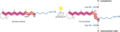 Bacteriorhodopsin with retinal
 -
 Cyclic photophosphorylation
 -
 Electron transport chain


Medical Disclaimer: WikiMD is for informational purposes only and is not a substitute for professional medical advice. Content may be inaccurate or outdated and should not be used for diagnosis or treatment. Always consult your healthcare provider for medical decisions. Verify information with trusted sources such as CDC.gov and NIH.gov. By using this site, you agree that WikiMD is not liable for any outcomes related to its content. See full disclaimer.
Credits:Most images are courtesy of Wikimedia commons, and templates, categories Wikipedia, licensed under CC BY SA or similar.
Translate page: - East Asian
中文,
日本,
한국어,
South Asian
हिन्दी,
தமிழ்,
తెలుగు,
Urdu,
ಕನ್ನಡ,
Southeast Asian
Indonesian,
Vietnamese,
Thai,
မြန်မာဘာသာ,
বাংলা
European
español,
Deutsch,
français,
Greek,
português do Brasil,
polski,
română,
русский,
Nederlands,
norsk,
svenska,
suomi,
Italian
Middle Eastern & African
عربى,
Turkish,
Persian,
Hebrew,
Afrikaans,
isiZulu,
Kiswahili,
Other
Bulgarian,
Hungarian,
Czech,
Swedish,
മലയാളം,
मराठी,
ਪੰਜਾਬੀ,
ગુજરાતી,
Portuguese,
Ukrainian

