Efficient energy use
Efficient energy use, also known as energy efficiency, is the goal to reduce the amount of energy required to provide products and services. For example, insulating a home allows a building to use less heating and cooling energy to achieve and maintain a comfortable temperature. Installing LED lighting, fluorescent lighting, or natural skylight windows reduces the amount of energy required to attain the same level of illumination compared to using traditional incandescent light bulbs. Improvements in energy efficiency are generally achieved by adopting a more efficient technology or production process.
Overview[edit]
There are many motivations to improve energy efficiency. Reducing energy use reduces energy costs and may result in a financial cost saving to consumers if the energy savings offset any additional costs of implementing an energy-efficient technology. Reducing energy use is also seen as a solution to the problem of reducing greenhouse gas emissions. According to the International Energy Agency, improved energy efficiency in buildings, industrial processes and transportation could reduce the world's energy needs in 2050 by one third, and help control global emissions of greenhouse gases.
Energy efficient buildings[edit]
Energy efficient buildings (new constructions or renovated existing buildings) can be characterized by an appropriate insulation and ventilation, orientation towards the sun, and incorporation of energy-efficient appliances. Green buildings, also known as sustainable buildings, are often designed to minimize the overall impact of the built environment on human health and the natural environment.
Energy efficient appliances[edit]
The choice of which space heating or cooling technology to use in buildings can have a significant impact on energy use and efficiency. For example, replacing an older 50% efficient natural gas furnace with a new 95% efficient one will dramatically reduce energy use, carbon emissions, and winter natural gas bills. Ground source heat pumps can be even more energy efficient and cost effective.
Energy efficient vehicles[edit]
An energy efficient vehicle is a vehicle that uses less energy than a traditional passenger vehicle. Energy efficient vehicles include electric cars, hybrid cars, and cars that run on alternative fuels.
See also[edit]
References[edit]
<references />
 | This medical article is a stub. You can help WikiMD by expanding the page. |
-
 Energy efficiency label A
 -
 Lower Manhattan from Jersey City
 -
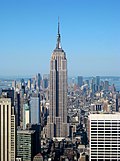 Empire State Building from the Top of the Rock
 -
 Carbon footprint travel mode
 -
 Efficient energy use


Medical Disclaimer: WikiMD is for informational purposes only and is not a substitute for professional medical advice. Content may be inaccurate or outdated and should not be used for diagnosis or treatment. Always consult your healthcare provider for medical decisions. Verify information with trusted sources such as CDC.gov and NIH.gov. By using this site, you agree that WikiMD is not liable for any outcomes related to its content. See full disclaimer.
Credits:Most images are courtesy of Wikimedia commons, and templates, categories Wikipedia, licensed under CC BY SA or similar.
Translate this page: - East Asian
中文,
日本,
한국어,
South Asian
हिन्दी,
தமிழ்,
తెలుగు,
Urdu,
ಕನ್ನಡ,
Southeast Asian
Indonesian,
Vietnamese,
Thai,
မြန်မာဘာသာ,
বাংলা
European
español,
Deutsch,
français,
Greek,
português do Brasil,
polski,
română,
русский,
Nederlands,
norsk,
svenska,
suomi,
Italian
Middle Eastern & African
عربى,
Turkish,
Persian,
Hebrew,
Afrikaans,
isiZulu,
Kiswahili,
Other
Bulgarian,
Hungarian,
Czech,
Swedish,
മലയാളം,
मराठी,
ਪੰਜਾਬੀ,
ગુજરાતી,
Portuguese,
Ukrainian
