Energy conservation
Energy conservation is a principle that describes the persistence of the total energy in a closed system. In the context of physics, it is defined as the concept that energy can neither be created nor destroyed, but can only be changed from one form to another. This principle is a fundamental concept of many fields of physics, including mechanics, electromagnetism, thermodynamics, quantum mechanics, and relativity.
Overview[edit]
The principle of energy conservation is embedded in the first law of thermodynamics. This law states that energy can be transferred or transformed, but it cannot be created or destroyed. The total energy of a system is the sum of its kinetic energy, potential energy, and internal energy. The total energy of a closed system remains constant unless acted upon by an external force.
Energy Conservation in Different Fields[edit]
Mechanics[edit]
In mechanics, energy conservation is closely related to the principles of conservation of momentum and conservation of angular momentum. These principles state that the total momentum and angular momentum of a system remain constant unless acted upon by an external force.
Electromagnetism[edit]
In electromagnetism, energy conservation is related to the principle of conservation of charge. This principle states that the total electric charge in a closed system remains constant.
Thermodynamics[edit]
In thermodynamics, energy conservation is expressed in the first and second laws of thermodynamics. The first law states that energy cannot be created or destroyed, while the second law states that the entropy of a closed system can only increase.
Quantum Mechanics[edit]
In quantum mechanics, energy conservation is related to the principle of conservation of probability. This principle states that the total probability of all possible outcomes of a quantum event is always 1.
Relativity[edit]
In relativity, energy conservation is related to the principle of conservation of mass-energy. This principle states that the total mass-energy of a closed system remains constant.
See Also[edit]
- Conservation laws
- First law of thermodynamics
- Second law of thermodynamics
- Conservation of momentum
- Conservation of angular momentum
- Conservation of charge
- Conservation of probability
- Conservation of mass-energy

This WikiMD article can only be edited by registered and verified editors. You can log in or register.
-
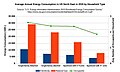 Energy conservation
 -
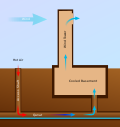 Qanat wind tower
 -
 Passive solar design illustration
 -
 Light switch with passive infrared sensor
 -
 Assorted LED lamps
 -
 Energy conservation


Medical Disclaimer: WikiMD is for informational purposes only and is not a substitute for professional medical advice. Content may be inaccurate or outdated and should not be used for diagnosis or treatment. Always consult your healthcare provider for medical decisions. Verify information with trusted sources such as CDC.gov and NIH.gov. By using this site, you agree that WikiMD is not liable for any outcomes related to its content. See full disclaimer.
Credits:Most images are courtesy of Wikimedia commons, and templates, categories Wikipedia, licensed under CC BY SA or similar.
Translate page: - East Asian
中文,
日本,
한국어,
South Asian
हिन्दी,
தமிழ்,
తెలుగు,
Urdu,
ಕನ್ನಡ,
Southeast Asian
Indonesian,
Vietnamese,
Thai,
မြန်မာဘာသာ,
বাংলা
European
español,
Deutsch,
français,
Greek,
português do Brasil,
polski,
română,
русский,
Nederlands,
norsk,
svenska,
suomi,
Italian
Middle Eastern & African
عربى,
Turkish,
Persian,
Hebrew,
Afrikaans,
isiZulu,
Kiswahili,
Other
Bulgarian,
Hungarian,
Czech,
Swedish,
മലയാളം,
मराठी,
ਪੰਜਾਬੀ,
ગુજરાતી,
Portuguese,
Ukrainian

