Dislocation of jaw

Editor-In-Chief: Prab R Tumpati, MD
Obesity, Sleep & Internal medicine
Founder, WikiMD Wellnesspedia &
W8MD's weight loss doctor NYC
Philadelphia GLP-1 weight loss and GLP-1 clinic NYC
| Dislocation of jaw | |
|---|---|

| |
| Synonyms | Jaw dislocation, mandibular dislocation |
| Pronounce | N/A |
| Specialty | N/A |
| Symptoms | Pain, difficulty speaking, difficulty closing the mouth |
| Complications | Temporomandibular joint disorder, chronic pain |
| Onset | Sudden |
| Duration | Variable, depending on treatment |
| Types | N/A |
| Causes | Trauma, yawning, dental procedures |
| Risks | Hypermobility, connective tissue disorders |
| Diagnosis | Physical examination, X-ray, CT scan |
| Differential diagnosis | Fracture, temporomandibular joint disorder |
| Prevention | N/A |
| Treatment | Manual reduction, surgery |
| Medication | Analgesics, muscle relaxants |
| Prognosis | Good with treatment |
| Frequency | Rare |
| Deaths | N/A |
Dislocation of the Jaw is a medical condition where the mandible (lower jaw) is moved out of its normal alignment with the temporomandibular joint (TMJ), which connects the jaw to the skull. This condition can cause severe pain and difficulty in opening and closing the mouth.
Causes[edit]
Dislocation of the jaw can occur due to a variety of reasons. It can be caused by a direct blow to the jaw, a fall, or an accident. It can also occur during dental procedures or while yawning or eating, when the mouth is opened too wide. Certain medical conditions such as Ehlers-Danlos syndrome can also increase the risk of jaw dislocation.
Symptoms[edit]
The main symptoms of a dislocated jaw include pain in the jaw, difficulty in opening and closing the mouth, an inability to bring the teeth together properly, and a visibly deformed jaw. Other symptoms can include drooling, difficulty speaking, and difficulty swallowing.
Diagnosis[edit]
Diagnosis of a dislocated jaw is usually made based on the patient's symptoms and a physical examination. Medical imaging techniques such as X-rays or a CT scan may be used to confirm the diagnosis and to check for any associated injuries.
Treatment[edit]
Treatment for a dislocated jaw usually involves a procedure known as a reduction, in which a doctor manually moves the jaw back into its normal position. This is usually done under local or general anesthesia. After the reduction, the jaw may be immobilized using bandages or a brace to prevent further dislocation. Pain medication and muscle relaxants may also be prescribed. In some cases, surgery may be required to repair or stabilize the joint.
Prevention[edit]
Prevention of jaw dislocation involves avoiding activities that put excessive strain on the jaw, such as wide yawning, high-impact sports, and certain dental procedures. Regular exercises to strengthen the jaw muscles may also help to prevent dislocation.
Gallery[edit]
-
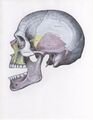 Anterior dislocation of jaw
 -
 Posterior dislocation of jaw
 -
 Superior dislocation of jaw
 -
 Lateral dislocation of jaw


See also[edit]
 | This medical article is a stub. You can help WikiMD by expanding the page. |

Medical Disclaimer: WikiMD is for informational purposes only and is not a substitute for professional medical advice. Content may be inaccurate or outdated and should not be used for diagnosis or treatment. Always consult your healthcare provider for medical decisions. Verify information with trusted sources such as CDC.gov and NIH.gov. By using this site, you agree that WikiMD is not liable for any outcomes related to its content. See full disclaimer.
Credits:Most images are courtesy of Wikimedia commons, and templates, categories Wikipedia, licensed under CC BY SA or similar.
Translate page: - East Asian
中文,
日本,
한국어,
South Asian
हिन्दी,
தமிழ்,
తెలుగు,
Urdu,
ಕನ್ನಡ,
Southeast Asian
Indonesian,
Vietnamese,
Thai,
မြန်မာဘာသာ,
বাংলা
European
español,
Deutsch,
français,
Greek,
português do Brasil,
polski,
română,
русский,
Nederlands,
norsk,
svenska,
suomi,
Italian
Middle Eastern & African
عربى,
Turkish,
Persian,
Hebrew,
Afrikaans,
isiZulu,
Kiswahili,
Other
Bulgarian,
Hungarian,
Czech,
Swedish,
മലയാളം,
मराठी,
ਪੰਜਾਬੀ,
ગુજરાતી,
Portuguese,
Ukrainian

