Dessert wine
Dessert wine is a type of wine that is typically sweet and often served with dessert. It is a broad category that includes several different types of wines, including fortified wines, late harvest wines, and ice wines.
History[edit]
The history of dessert wine dates back to ancient times. The Greeks and Romans were known to produce sweet wines, often by drying grapes in the sun or by boiling the must. In the Middle Ages, sweet wines were highly prized and often used for medicinal purposes.
Production[edit]
Dessert wines are produced in a variety of ways. Some are made by allowing the grapes to become overripe, which increases their sugar content. Others are made by stopping the fermentation process before all the sugar has been converted into alcohol. Still others are made by adding alcohol to the wine, which kills the yeast and leaves residual sugar in the wine.
Types[edit]
There are many different types of dessert wine, including:
- Port: A fortified wine from Portugal that is typically rich and sweet.
- Sherry: A fortified wine from Spain that can range from dry to very sweet.
- Madeira: A fortified wine from the Madeira Islands that is often sweet and has a distinctive caramel flavor.
- Sauternes: A sweet wine from the Bordeaux region of France that is made from grapes affected by noble rot.
- Tokaji: A sweet wine from Hungary that is made from grapes affected by noble rot.
- Ice wine: A sweet wine made from grapes that have been frozen on the vine.
Serving[edit]
Dessert wines are typically served in small glasses and at a temperature of around 55°F (13°C). They are often paired with desserts that match their sweetness level, but can also be enjoyed on their own.
See also[edit]

Dessert_wine[edit]
-
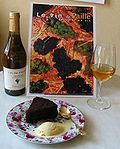 Vin paille
 -
 Château d'Yquem 1999
 -
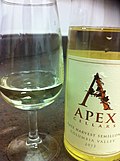 Late harvest Sémillon
 -
 Kopke Port & Chocolate
 -
 Caluso passito
 -
 Ice wine grapes
 -
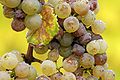 Botrytis Riesling
 -
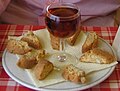 Vin Santo


.jpg)


Medical Disclaimer: WikiMD is for informational purposes only and is not a substitute for professional medical advice. Content may be inaccurate or outdated and should not be used for diagnosis or treatment. Always consult your healthcare provider for medical decisions. Verify information with trusted sources such as CDC.gov and NIH.gov. By using this site, you agree that WikiMD is not liable for any outcomes related to its content. See full disclaimer.
Credits:Most images are courtesy of Wikimedia commons, and templates, categories Wikipedia, licensed under CC BY SA or similar.
Translate this page: - East Asian
中文,
日本,
한국어,
South Asian
हिन्दी,
தமிழ்,
తెలుగు,
Urdu,
ಕನ್ನಡ,
Southeast Asian
Indonesian,
Vietnamese,
Thai,
မြန်မာဘာသာ,
বাংলা
European
español,
Deutsch,
français,
Greek,
português do Brasil,
polski,
română,
русский,
Nederlands,
norsk,
svenska,
suomi,
Italian
Middle Eastern & African
عربى,
Turkish,
Persian,
Hebrew,
Afrikaans,
isiZulu,
Kiswahili,
Other
Bulgarian,
Hungarian,
Czech,
Swedish,
മലയാളം,
मराठी,
ਪੰਜਾਬੀ,
ગુજરાતી,
Portuguese,
Ukrainian
