Dental trauma

Prab R. Tumpati, MD — Editor-in-Chief, WikiMD Medical Encyclopedia
Internal medicine • Obesity medicine • Sleep medicine
Professional affiliations: Founder of WikiMD and W8MD Weight Loss, Sleep & MedSpa.
Biography, credentials and affiliations • Editorial policy • Disclosure policy
| Dental trauma | |
|---|---|

| |
| Synonyms | Tooth injury, Oral trauma |
| Pronounce | N/A |
| Specialty | N/A |
| Symptoms | Tooth fracture, Tooth displacement, Tooth avulsion, Toothache |
| Complications | Pulp necrosis, Tooth loss, Infection |
| Onset | Acute |
| Duration | Varies depending on severity |
| Types | N/A |
| Causes | Physical trauma, Sports injuries, Accidents |
| Risks | Contact sports, Falls, Motor vehicle accidents |
| Diagnosis | Clinical examination, Dental radiography |
| Differential diagnosis | Dental caries, Periodontal disease |
| Prevention | Mouthguard, Safety equipment |
| Treatment | Dental restoration, Root canal therapy, Tooth splinting |
| Medication | N/A |
| Prognosis | Depends on severity and treatment |
| Frequency | Common in children and adolescents |
| Deaths | N/A |
Dental trauma refers to injuries to the teeth, gums, and surrounding tissues. It is a common occurrence and can result from various causes, including accidents, sports injuries, and violence. Dental trauma can affect people of all ages, but it is particularly prevalent among children and young adults.
Causes[edit]
The most common causes of dental trauma include falls, sports-related injuries, fights, and motor vehicle accidents. Other causes can include biting on hard foods or objects, and various forms of violence.
Types[edit]
There are several types of dental trauma, including:
- Tooth fracture: This involves a break or crack in the tooth. It can range from a minor chipping of the tooth enamel to a severe fracture that affects the root of the tooth.
- Tooth displacement: This occurs when a tooth is pushed out of its normal position. It can be pushed sideways, outwards, or into the jawbone.
- Tooth avulsion: This is the complete displacement of a tooth from its socket. It is a serious condition that requires immediate treatment.
- Injury to the periodontal tissues: This includes injuries to the gums and the supporting structures of the teeth.
Symptoms[edit]
The symptoms of dental trauma can vary depending on the type and severity of the injury. They can include:
- Pain
- Sensitivity to hot or cold
- Loose or displaced teeth
- Swelling in the gums or face
- Difficulty in opening the mouth or chewing
- Bleeding from the mouth
Treatment[edit]
The treatment for dental trauma depends on the type and severity of the injury. It can include:
- Pain management: This can involve over-the-counter pain relievers or prescription medications.
- Dental procedures: These can include filling a fractured tooth, repositioning a displaced tooth, or re-implanting an avulsed tooth.
- Dental surgery: In severe cases, surgery may be required to repair damaged teeth or tissues.
Prevention[edit]
Prevention of dental trauma involves taking precautions to avoid injuries to the mouth and teeth. This can include wearing mouthguards during sports, using seatbelts in vehicles, and avoiding hard foods or objects that can cause tooth fracture.
Gallery[edit]
-
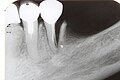 Dental X-rays
 -
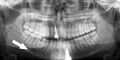 Simple mandible fracture
 -
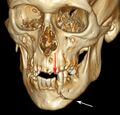 3D CT mandible fracture
 -
 Head facial nerve branches
 -
 Front tooth trauma treatment steps
 -
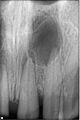 Periapical radiolucency


See also[edit]

Advertise on WikiMD — 81,000+ full articles, ~900,000 total pages, ~250 million page views. Global reach, limited time promotional rates from $1/page/day. Learn more · View stats


Translate page: - East Asian
中文,
日本,
한국어,
South Asian
हिन्दी,
தமிழ்,
తెలుగు,
Urdu,
ಕನ್ನಡ,
Southeast Asian
Indonesian,
Vietnamese,
Thai,
မြန်မာဘာသာ,
বাংলা
European
español,
Deutsch,
français,
Greek,
português do Brasil,
polski,
română,
русский,
Nederlands,
norsk,
svenska,
suomi,
Italian
Middle Eastern & African
عربى,
Turkish,
Persian,
Hebrew,
Afrikaans,
isiZulu,
Kiswahili,
Other
Bulgarian,
Hungarian,
Czech,
Swedish,
മലയാളം,
मराठी,
ਪੰਜਾਬੀ,
ગુજરાતી,
Portuguese,
Ukrainian
About WikiMD • Contact • Disclaimer • Privacy • Copyright • Site statistics
Some content and images may originate from Wikimedia Commons or Wikipedia and remain subject to their stated licenses. Unless otherwise noted, eligible WikiMD content is available under CC BY-SA 4.0.
WikiMD Wellnesspedia — Free health & wellness information for patients, students, and health professionals.

