DNA polymerase alpha
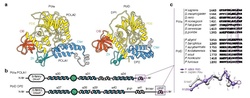
DNA polymerase alpha is an enzyme found in eukaryotic cells that plays a crucial role in the process of DNA replication. It is one of the several DNA polymerases involved in the replication of the genome and is specifically responsible for the initiation of DNA synthesis.
Structure and Function[edit]
DNA polymerase alpha is a multi-subunit enzyme complex composed of four subunits: the catalytic subunit (POLA1), the regulatory subunit (POLA2), and two primase subunits (PRIM1 and PRIM2). The catalytic subunit is responsible for the polymerase activity, while the primase subunits are involved in the synthesis of a short RNA primer.
Role in DNA Replication[edit]
During DNA replication, DNA polymerase alpha is recruited to the origin of replication by the pre-replication complex. It synthesizes a short RNA-DNA hybrid primer, which is necessary for the elongation of the new DNA strand. This primer is then extended by DNA polymerase delta and DNA polymerase epsilon, which have higher processivity and proofreading capabilities.
Interaction with Other Proteins[edit]
DNA polymerase alpha interacts with several other proteins involved in DNA replication, including the replication protein A (RPA), the proliferating cell nuclear antigen (PCNA), and the minichromosome maintenance (MCM) complex. These interactions are essential for the coordination and regulation of the replication process.
Regulation[edit]
The activity of DNA polymerase alpha is tightly regulated throughout the cell cycle. It is primarily active during the S phase when DNA replication occurs. The regulation is achieved through various mechanisms, including phosphorylation by cyclin-dependent kinases (CDKs) and interactions with other regulatory proteins.
Clinical Significance[edit]
Mutations in the genes encoding the subunits of DNA polymerase alpha can lead to various genetic disorders and have been implicated in certain types of cancer. The enzyme is also a target for certain antiviral and anticancer drugs, which aim to inhibit its activity and prevent the replication of viral or cancerous cells.
See Also[edit]
References[edit]
External Links[edit]

 | This enzyme-related article is a stub. You can help WikiMD by expanding the page. |

Medical Disclaimer: WikiMD is for informational purposes only and is not a substitute for professional medical advice. Content may be inaccurate or outdated and should not be used for diagnosis or treatment. Always consult your healthcare provider for medical decisions. Verify information with trusted sources such as CDC.gov and NIH.gov. By using this site, you agree that WikiMD is not liable for any outcomes related to its content. See full disclaimer.
Credits:Most images are courtesy of Wikimedia commons, and templates, categories Wikipedia, licensed under CC BY SA or similar.
Translate page: - East Asian
中文,
日本,
한국어,
South Asian
हिन्दी,
தமிழ்,
తెలుగు,
Urdu,
ಕನ್ನಡ,
Southeast Asian
Indonesian,
Vietnamese,
Thai,
မြန်မာဘာသာ,
বাংলা
European
español,
Deutsch,
français,
Greek,
português do Brasil,
polski,
română,
русский,
Nederlands,
norsk,
svenska,
suomi,
Italian
Middle Eastern & African
عربى,
Turkish,
Persian,
Hebrew,
Afrikaans,
isiZulu,
Kiswahili,
Other
Bulgarian,
Hungarian,
Czech,
Swedish,
മലയാളം,
मराठी,
ਪੰਜਾਬੀ,
ગુજરાતી,
Portuguese,
Ukrainian

