DNA polymerase
DNA polymerase is an enzyme that synthesizes DNA molecules from deoxyribonucleotides, the building blocks of DNA. These enzymes are essential for DNA replication and usually work in pairs to create two identical DNA strands from one original DNA molecule.
Function[edit]
During the process of DNA replication, DNA polymerase adds new deoxyribonucleotides to the 3' end of a DNA strand. This process occurs in the 5' to 3' direction, meaning that DNA polymerase can only add nucleotides to the 3' end of the DNA strand.
Types[edit]
There are several types of DNA polymerase that play a role in DNA replication:
- DNA polymerase I - This enzyme removes the RNA primer (which starts the DNA synthesis) and replaces it with DNA.
- DNA polymerase II - This enzyme is involved in the process of DNA repair.
- DNA polymerase III - This is the main enzyme involved in DNA replication.
Role in DNA Repair[edit]
DNA polymerase also plays a crucial role in DNA repair. When DNA is damaged, it can cause errors in the DNA sequence. DNA polymerase can recognize these errors and replace the incorrect nucleotides with the correct ones.
Inhibitors[edit]
Certain drugs, known as DNA polymerase inhibitors, can inhibit the function of DNA polymerase. These drugs are often used in the treatment of cancer and viral infections.
See Also[edit]

This WikiMD article can only be edited by registered and verified editors. You can log in or register.
DNA_polymerase[edit]
-
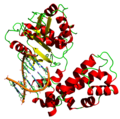 DNA polymerase
 -
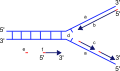 Replication fork
 -
 DNA polymerase
 -
 PDB 2hht EBI
 -
 PDB 2dy4 EBI
 -
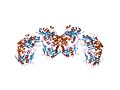 PDB 1xhz EBI
 -
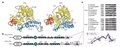 Shared primase-binding peptide in archaeal PolD and eukaryotic Polα


Medical Disclaimer: WikiMD is for informational purposes only and is not a substitute for professional medical advice. Content may be inaccurate or outdated and should not be used for diagnosis or treatment. Always consult your healthcare provider for medical decisions. Verify information with trusted sources such as CDC.gov and NIH.gov. By using this site, you agree that WikiMD is not liable for any outcomes related to its content. See full disclaimer.
Credits:Most images are courtesy of Wikimedia commons, and templates, categories Wikipedia, licensed under CC BY SA or similar.
Translate page: - East Asian
中文,
日本,
한국어,
South Asian
हिन्दी,
தமிழ்,
తెలుగు,
Urdu,
ಕನ್ನಡ,
Southeast Asian
Indonesian,
Vietnamese,
Thai,
မြန်မာဘာသာ,
বাংলা
European
español,
Deutsch,
français,
Greek,
português do Brasil,
polski,
română,
русский,
Nederlands,
norsk,
svenska,
suomi,
Italian
Middle Eastern & African
عربى,
Turkish,
Persian,
Hebrew,
Afrikaans,
isiZulu,
Kiswahili,
Other
Bulgarian,
Hungarian,
Czech,
Swedish,
മലയാളം,
मराठी,
ਪੰਜਾਬੀ,
ગુજરાતી,
Portuguese,
Ukrainian

