Crocetin
Crocetin is a natural carotenoid dicarboxylic acid that is found in the Crocus sativus (saffron) and Gardenia jasminoides (gardenia) plants. It is the compound primarily responsible for the color of saffron.
Chemical Structure[edit]
Crocetin is a member of the carotenoid family, which are tetraterpenoids. It is a dicarboxylic acid that is structurally similar to Vitamin A and other carotenoids. The chemical formula of crocetin is C20H24O4.
Sources[edit]
Crocetin is primarily found in the stigmas of Crocus sativus, commonly known as saffron. It is also found in the fruit of Gardenia jasminoides, also known as gardenia.
Health Benefits[edit]
Crocetin has been studied for its potential health benefits. It has been found to have antioxidant properties, which means it can help protect the body from damage by free radicals. It has also been studied for its potential to improve sleep quality, reduce inflammation, and improve symptoms of depression.
Culinary Uses[edit]
In addition to its potential health benefits, crocetin is also used in cooking for its color. It is the compound that gives saffron its characteristic yellow color. Saffron is used in a variety of dishes, including paella, risotto, and biryani.
See Also[edit]

-
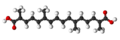 Crocetin 3D balls (rotated)
 -
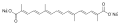 Transcrocetinate sodium
.png)


Medical Disclaimer: WikiMD is for informational purposes only and is not a substitute for professional medical advice. Content may be inaccurate or outdated and should not be used for diagnosis or treatment. Always consult your healthcare provider for medical decisions. Verify information with trusted sources such as CDC.gov and NIH.gov. By using this site, you agree that WikiMD is not liable for any outcomes related to its content. See full disclaimer.
Credits:Most images are courtesy of Wikimedia commons, and templates, categories Wikipedia, licensed under CC BY SA or similar.
Translate page: - East Asian
中文,
日本,
한국어,
South Asian
हिन्दी,
தமிழ்,
తెలుగు,
Urdu,
ಕನ್ನಡ,
Southeast Asian
Indonesian,
Vietnamese,
Thai,
မြန်မာဘာသာ,
বাংলা
European
español,
Deutsch,
français,
Greek,
português do Brasil,
polski,
română,
русский,
Nederlands,
norsk,
svenska,
suomi,
Italian
Middle Eastern & African
عربى,
Turkish,
Persian,
Hebrew,
Afrikaans,
isiZulu,
Kiswahili,
Other
Bulgarian,
Hungarian,
Czech,
Swedish,
മലയാളം,
मराठी,
ਪੰਜਾਬੀ,
ગુજરાતી,
Portuguese,
Ukrainian

