Citrus production
Citrus production is the cultivation and harvest of citrus species to produce fruit for consumption. Citrus is a genus of flowering trees and shrubs in the rue family, Rutaceae. The most commonly cultivated citrus fruits are the orange, lemon, grapefruit, and lime.
History[edit]
Citrus production has a rich history dating back to ancient times. The cultivation of citrus fruits began in Southeast Asia and spread to the Mediterranean region and the Americas through trade and exploration.
Citrus Species[edit]
There are several species of citrus fruits that are commercially grown. These include:
- Orange: The orange is the most widely grown citrus fruit. It is a hybrid of ancient cultivated origin, possibly between pomelo and mandarin.
- Lemon: The lemon is a species of small evergreen tree native to Asia, primarily used for its juice, though the pulp and rind are also used, primarily in cooking and baking.
- Grapefruit: The grapefruit is a subtropical citrus tree known for its relatively large sour to semi-sweet fruit.
- Lime: Limes are a small citrus fruit, whose skin and flesh are green in color and which have an acidic juice vesicles.
Cultivation[edit]
Citrus trees are typically grown in tropical and subtropical climates. They require a lot of sunlight and well-drained soil. The trees are also sensitive to frost.
Harvesting[edit]
Citrus fruits are typically harvested by hand to prevent damage to the fruit. The fruit is then sorted and packed for distribution.
Diseases and Pests[edit]
Citrus trees are susceptible to a number of diseases and pests. These include the citrus canker, citrus greening disease, and the Asian citrus psyllid.
Production by Country[edit]
The largest producers of citrus fruits are China, Brazil, the United States, and Mexico.
See Also[edit]
References[edit]

This WikiMD article can only be edited by registered and verified editors. You can log in or register.
Citrus_production[edit]
-
Citrus growing regions
-
Citrus farm in Belize
-
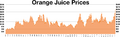 Orange juice prices
 -
Citrus greening comparison


Medical Disclaimer: WikiMD is for informational purposes only and is not a substitute for professional medical advice. Content may be inaccurate or outdated and should not be used for diagnosis or treatment. Always consult your healthcare provider for medical decisions. Verify information with trusted sources such as CDC.gov and NIH.gov. By using this site, you agree that WikiMD is not liable for any outcomes related to its content. See full disclaimer.
Credits:Most images are courtesy of Wikimedia commons, and templates, categories Wikipedia, licensed under CC BY SA or similar.
Translate page: - East Asian
中文,
日本,
한국어,
South Asian
हिन्दी,
தமிழ்,
తెలుగు,
Urdu,
ಕನ್ನಡ,
Southeast Asian
Indonesian,
Vietnamese,
Thai,
မြန်မာဘာသာ,
বাংলা
European
español,
Deutsch,
français,
Greek,
português do Brasil,
polski,
română,
русский,
Nederlands,
norsk,
svenska,
suomi,
Italian
Middle Eastern & African
عربى,
Turkish,
Persian,
Hebrew,
Afrikaans,
isiZulu,
Kiswahili,
Other
Bulgarian,
Hungarian,
Czech,
Swedish,
മലയാളം,
मराठी,
ਪੰਜਾਬੀ,
ગુજરાતી,
Portuguese,
Ukrainian


