Chinese New Year
Chinese New Year also known as the Spring Festival in modern China, is an important Chinese festival celebrated at the turn of the traditional lunisolar Chinese calendar. It is one of several Lunar New Year holidays celebrated in Asia.
History[edit]
The origin of Chinese New Year is itself centuries old and gains significance because of several myths and traditions. Ancient Chinese New Year is a reflection on how the people behaved and what they believed in the most.
Celebration[edit]
Celebrations traditionally run from the evening preceding the first day, to the Lantern Festival on the 15th day of the first calendar month. The first day of the New Year falls on the new moon between 21 January and 20 February. In 2022, the first day of the Chinese New Year was on Tuesday, 1 February, initiating the year of the Tiger.
Traditions[edit]
The evening preceding Chinese New Year’s Day is frequently regarded as an occasion for Chinese families to gather for the annual reunion dinner. It is also traditional for every family to thoroughly clean their house, in order to sweep away any ill-fortune and to make way for incoming good luck. Windows and doors are decorated with red color paper-cuts and couplets with popular themes of "good fortune" or "happiness", "wealth", and "longevity". Other activities include lighting firecrackers and giving money in red paper envelopes.
Zodiac[edit]
The Chinese New Year is associated with the Chinese zodiac, which operates on a 12-year cycle. Each year in that cycle is related to an animal sign. These signs are the rat, ox, tiger, rabbit, dragon, snake, horse, sheep, monkey, rooster, dog and pig. It is celebrated in full swing in many Asian countries, and is considered a major holiday in China, Taiwan, Hong Kong, and Singapore.
See also[edit]
 | This China-related article is a stub. You can help Wikipedia by adding missing information. |
Chinese New Year gallery[edit]
-
 Dragon in Chinatown NYC Lunar New Year
 -
 Chinese Paper Cutting
 -
 Chinese New Year decorations along New Bridge Road, Singapore
 -
 New Year Scene
 -
 Chinese New Year's poetry
 -
 Spring couplets written by Qianlong Emperor of Qing dynasty
 -
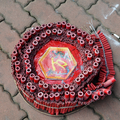 鞭炮 "Gunpowder Whip"
 -
 Receive the gods in Chinese New Year
 -
 Incense at grave
 -
 ChinNewYr dragon


Ad. Transform your health with W8MD Weight Loss, Sleep & MedSpa

Tired of being overweight?
Special offer:
Budget GLP-1 weight loss medications
- Semaglutide starting from $29.99/week and up with insurance for visit of $59.99 and up per week self pay.
- Tirzepatide starting from $45.00/week and up (dose dependent) or $69.99/week and up self pay
✔ Same-week appointments, evenings & weekends ✔ Tele visits available with certain limitations Learn more:
- GLP-1 weight loss clinic NYC
- W8MD's NYC medical weight loss
- W8MD Philadelphia GLP-1 shots
- Philadelphia GLP-1 injections
- Affordable GLP-1 shots NYC
- Budget GLP-1 shots
|
WikiMD Medical Encyclopedia |
Medical Disclaimer: WikiMD is for informational purposes only and is not a substitute for professional medical advice. Content may be inaccurate or outdated and should not be used for diagnosis or treatment. Always consult your healthcare provider for medical decisions. Verify information with trusted sources such as CDC.gov and NIH.gov. By using this site, you agree that WikiMD is not liable for any outcomes related to its content. See full disclaimer.
Credits:Most images are courtesy of Wikimedia commons, and templates, categories Wikipedia, licensed under CC BY SA or similar.
Translate this page: - East Asian
中文,
日本,
한국어,
South Asian
हिन्दी,
தமிழ்,
తెలుగు,
Urdu,
ಕನ್ನಡ,
Southeast Asian
Indonesian,
Vietnamese,
Thai,
မြန်မာဘာသာ,
বাংলা
European
español,
Deutsch,
français,
Greek,
português do Brasil,
polski,
română,
русский,
Nederlands,
norsk,
svenska,
suomi,
Italian
Middle Eastern & African
عربى,
Turkish,
Persian,
Hebrew,
Afrikaans,
isiZulu,
Kiswahili,
Other
Bulgarian,
Hungarian,
Czech,
Swedish,
മലയാളം,
मराठी,
ਪੰਜਾਬੀ,
ગુજરાતી,
Portuguese,
Ukrainian
