Lantern Festival


Lantern Festival is a significant festival celebrated on the 15th day of the first month in the lunar calendar, marking the final day of the traditional Chinese New Year celebrations. Known in China as Yuan Xiao Jie (元宵节), the festival is renowned for its beautiful lantern displays, lion and dragon dances, and the consumption of tangyuan (汤圆), which are sweet glutinous rice balls symbolizing reunion and happiness.
History[edit]
The origins of the Lantern Festival can be traced back more than 2000 years to the Han Dynasty, where it began as a ceremonial worship of the Buddhist deity Guanyin. It was believed that lighting lanterns would help guide lost spirits and honor deities. Over time, the festival evolved to incorporate various elements of Chinese culture and folklore, including the legend of the Jade Emperor.
Customs and Traditions[edit]
The Lantern Festival is celebrated with various customs across different regions in China and other Asian countries. The most common traditions include:
- Lantern Display: Streets, homes, and public spaces are decorated with colorful lanterns of various sizes and shapes. In some areas, lanterns are released into the sky or floated on rivers, symbolizing the letting go of past selves and embracing new beginnings.
- Lion and Dragon Dances: Performances of lion and dragon dances are common, believed to bring good luck and drive away evil spirits.
- Eating Tangyuan: The consumption of tangyuan is a central part of the celebration, representing family unity and prosperity. These sweet rice balls are often filled with sesame, peanut, or red bean paste.
- Guessing Lantern Riddles: Lanterns are often adorned with riddles, and people enjoy trying to solve them. This tradition is thought to stimulate the mind and foster a sense of community.
Significance[edit]
The Lantern Festival holds significant cultural and historical importance. It symbolizes the reunion of family and the social and harmonious aspect of life. It also marks the end of the Chinese New Year period, transitioning into the beginning of spring and the farming season. The festival is a time of joy, where people celebrate the strengthening of bonds with family and friends, express their hopes for the future, and enjoy the beauty of life.
Modern Celebrations[edit]
In modern times, the Lantern Festival has seen innovations in lantern design and the incorporation of technology, with LED lights and even drones being used to create spectacular displays. Despite these advancements, the festival remains deeply rooted in tradition, with its customs and rituals preserved across generations.
See also[edit]
-
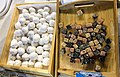 Yuanxiao and fillings (20210225185338)
 -
 Tangyuan
 -
 Statues of mother and daughter celebrating the Lantern Festival. Xi'an
.jpg)

External links[edit]


 Public holidays in China Public holidays in China |
||||
|---|---|---|---|---|
Sometimes if Mid-Autumn Festival is near National Day, Mid-Autumn Festival may be in the golden week.
|

Ad. Transform your life with W8MD's Budget GLP-1 injections from $29.99


W8MD offers a medical weight loss program to GLP1 weight loss doctor Philadelphia. Our physician-supervised medical weight loss NYC provides:
- Weight loss injections NYC (generic and brand names):
- Zepbound / Mounjaro, Wegovy / Ozempic, Saxenda
- Learn more on Budget GLP1 weight loss injections NYC & Philadelphia GLP1 weight loss shots
- Most insurances accepted or discounted self-pay rates. We will obtain insurance prior authorizations if needed.
- Generic GLP1 weight loss injections from $29.99 for the starting dose of Semaglutide and $45.00 for Tirzepatide with insurance for the visit.
- Also offer prescription weight loss medications including Phentermine, Qsymia, Diethylpropion, Contrave etc.
NYC weight loss doctor appointmentsNYC weight loss doctor appointments
Start your NYC weight loss journey today at our NYC medical weight loss and Philadelphia medical weight loss clinics.
- Call 718-946-5500 to lose weight in NYC or for medical weight loss in Philadelphia 215-676-2334.
- Tags:GLP1 medical weight loss doctor NYC, Philadelphia lose weight Zepbound NYC, Budget GLP1 weight loss injections, Wegovy Philadelphia, Wegovy NYC, Philadelphia medical weight loss, Brookly weight loss Wegovy NYC and Best weight loss program NYC


|
WikiMD's Wellness Encyclopedia |
| Let Food Be Thy Medicine Medicine Thy Food - Hippocrates |
Medical Disclaimer: WikiMD is not a substitute for professional medical advice. The information on WikiMD is provided as an information resource only, may be incorrect, outdated or misleading, and is not to be used or relied on for any diagnostic or treatment purposes. Please consult your health care provider before making any healthcare decisions or for guidance about a specific medical condition. WikiMD expressly disclaims responsibility, and shall have no liability, for any damages, loss, injury, or liability whatsoever suffered as a result of your reliance on the information contained in this site. By visiting this site you agree to the foregoing terms and conditions, which may from time to time be changed or supplemented by WikiMD. If you do not agree to the foregoing terms and conditions, you should not enter or use this site. See full disclaimer.
Credits:Most images are courtesy of Wikimedia commons, and templates, categories Wikipedia, licensed under CC BY SA or similar.
Translate this page: - East Asian
中文,
日本,
한국어,
South Asian
हिन्दी,
தமிழ்,
తెలుగు,
Urdu,
ಕನ್ನಡ,
Southeast Asian
Indonesian,
Vietnamese,
Thai,
မြန်မာဘာသာ,
বাংলা
European
español,
Deutsch,
français,
Greek,
português do Brasil,
polski,
română,
русский,
Nederlands,
norsk,
svenska,
suomi,
Italian
Middle Eastern & African
عربى,
Turkish,
Persian,
Hebrew,
Afrikaans,
isiZulu,
Kiswahili,
Other
Bulgarian,
Hungarian,
Czech,
Swedish,
മലയാളം,
मराठी,
ਪੰਜਾਬੀ,
ગુજરાતી,
Portuguese,
Ukrainian
