Carotidynia
| Carotidynia | |
|---|---|
| Synonyms | N/A |
| Pronounce | N/A |
| Specialty | N/A |
| Symptoms | Neck pain, tenderness |
| Complications | Chronic pain |
| Onset | Sudden onset |
| Duration | Variable |
| Types | N/A |
| Causes | Unknown, possibly inflammation |
| Risks | Vascular conditions |
| Diagnosis | Clinical examination, imaging studies |
| Differential diagnosis | N/A |
| Prevention | N/A |
| Treatment | Pain management, anti-inflammatory medication |
| Medication | N/A |
| Prognosis | Good with treatment |
| Frequency | Rare |
| Deaths | N/A |
Carotidynia is a rare medical condition characterized by pain and tenderness in the region of the carotid artery. It is often associated with inflammation of the carotid artery and surrounding tissues. The condition can present with sudden onset of neck pain that may radiate to the jaw, ear, or head.
Symptoms[edit]
The primary symptom of carotidynia is neck pain localized to the area of the carotid artery. This pain is often accompanied by tenderness upon palpation. Some patients may experience throbbing or pulsating sensations. The pain may be exacerbated by head movement or swallowing.
Causes[edit]
The exact cause of carotidynia is unknown. It is hypothesized to be related to inflammation of the carotid artery or its surrounding structures. Some cases have been associated with viral infections, vascular conditions, or autoimmune disorders.
Diagnosis[edit]
Diagnosis of carotidynia is primarily based on clinical examination and the exclusion of other potential causes of neck pain. Imaging studies such as ultrasound, CT scan, or MRI may be used to rule out other conditions like carotid artery dissection or aneurysm.
Treatment[edit]
Treatment for carotidynia focuses on pain management and reducing inflammation. Nonsteroidal anti-inflammatory drugs (NSAIDs) are commonly prescribed. In some cases, corticosteroids may be used to reduce inflammation. Most patients respond well to treatment and experience a resolution of symptoms.
Prognosis[edit]
The prognosis for carotidynia is generally good, with most patients experiencing relief of symptoms with appropriate treatment. However, some individuals may experience recurrent episodes or chronic pain.
See also[edit]
References[edit]
External links[edit]
- Carotidynia on WikiMD
-
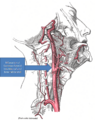 Carotidynia


Medical Disclaimer: WikiMD is for informational purposes only and is not a substitute for professional medical advice. Content may be inaccurate or outdated and should not be used for diagnosis or treatment. Always consult your healthcare provider for medical decisions. Verify information with trusted sources such as CDC.gov and NIH.gov. By using this site, you agree that WikiMD is not liable for any outcomes related to its content. See full disclaimer.
Credits:Most images are courtesy of Wikimedia commons, and templates, categories Wikipedia, licensed under CC BY SA or similar.
Translate page: - East Asian
中文,
日本,
한국어,
South Asian
हिन्दी,
தமிழ்,
తెలుగు,
Urdu,
ಕನ್ನಡ,
Southeast Asian
Indonesian,
Vietnamese,
Thai,
မြန်မာဘာသာ,
বাংলা
European
español,
Deutsch,
français,
Greek,
português do Brasil,
polski,
română,
русский,
Nederlands,
norsk,
svenska,
suomi,
Italian
Middle Eastern & African
عربى,
Turkish,
Persian,
Hebrew,
Afrikaans,
isiZulu,
Kiswahili,
Other
Bulgarian,
Hungarian,
Czech,
Swedish,
മലയാളം,
मराठी,
ਪੰਜਾਬੀ,
ગુજરાતી,
Portuguese,
Ukrainian

