BK channel
BK channel is a type of potassium channel that is activated by both voltage and intracellular calcium ions. These channels are known for their large conductance, hence the name "Big Potassium" or "BK" channel. They are found in many tissues in the body and play a crucial role in various physiological processes.
Structure[edit]
BK channels are tetramers, meaning they are composed of four subunits. Each subunit consists of seven transmembrane domains with a large extracellular loop between the fifth and sixth domains. The N-terminus and C-terminus are located intracellularly. The C-terminus contains the calcium-binding sites and the voltage sensor.
Function[edit]
BK channels are involved in a variety of physiological processes. They help regulate action potentials in neurons, control the release of neurotransmitters, and contribute to the regulation of smooth muscle tone. In the kidney, they play a role in potassium secretion and fluid balance. In the ear, they are involved in the tuning of hair cells to specific frequencies of sound.
Clinical significance[edit]
Mutations in the gene encoding the BK channel can lead to a variety of disorders. For example, gain-of-function mutations can cause epilepsy and ataxia, while loss-of-function mutations can lead to hypertension. In addition, BK channels have been implicated in the development of certain types of cancer, as they can promote cell proliferation and migration.
Pharmacology[edit]
Several drugs have been developed to modulate the activity of BK channels. These include calcium channel blockers, which inhibit the activity of the channel, and potassium channel openers, which enhance its activity. These drugs are used in the treatment of various conditions, such as hypertension, asthma, and certain neurological disorders.
See also[edit]
 | This neuroscience article is a stub. You can help WikiMD by expanding the page. |
 | This medical article is a stub. You can help WikiMD by expanding the page. |
BK_channel[edit]
-
BK cartoon
-
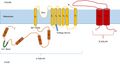 BK Channel Diagram

Sponsored Health Resource

W8MD Weight Loss, Sleep & MedSpa
Looking for physician-supervised weight loss, semaglutide, tirzepatide, or GLP-1 receptor agonist options? W8MD helps eligible patients in New York City, Brooklyn, New Jersey, Connecticut, Pennsylvania, Delaware, and greater Philadelphia with medical weight loss, sleep medicine, and long-term maintenance support.
GLP-1 specials: Affordable GLP-1 injections NYC and Philadelphia starting from $29.99/week and up for semaglutide with insurance accepted for qualifying visits, and $45/week and up for tirzepatide with insurance accepted for qualifying visits. Self-pay options start from $59.99/week and up for semaglutide and $69.99/week and up for tirzepatide.
Medical weight loss NYC | Affordable GLP-1 injections NYC | Budget GLP-1 weight loss shots Philadelphia | New Jersey medical weight loss | NYC medical weight loss | Philadelphia medical weight loss | Sleep clinic NYC | W8MD's Philadelphia GLP-1 doctor | Weight loss prescriptions NYC
Book a W8MD appointment · View GLP-1 specials
Paid promotional message. Eligibility, pricing, insurance coverage, medication availability, and results vary. Medical evaluation required.

Medical Disclaimer: WikiMD is for informational purposes only and is not a substitute for professional medical advice. Content may be inaccurate or outdated and should not be used for diagnosis or treatment. Always consult your healthcare provider for medical decisions. Verify information with trusted sources such as CDC.gov and NIH.gov. By using this site, you agree that WikiMD is not liable for any outcomes related to its content. See full disclaimer.
Credits:Most images are courtesy of Wikimedia commons, and templates, categories Wikipedia, licensed under CC BY SA or similar.
Translate page: - East Asian
中文,
日本,
한국어,
South Asian
हिन्दी,
தமிழ்,
తెలుగు,
Urdu,
ಕನ್ನಡ,
Southeast Asian
Indonesian,
Vietnamese,
Thai,
မြန်မာဘာသာ,
বাংলা
European
español,
Deutsch,
français,
Greek,
português do Brasil,
polski,
română,
русский,
Nederlands,
norsk,
svenska,
suomi,
Italian
Middle Eastern & African
عربى,
Turkish,
Persian,
Hebrew,
Afrikaans,
isiZulu,
Kiswahili,
Other
Bulgarian,
Hungarian,
Czech,
Swedish,
മലയാളം,
मराठी,
ਪੰਜਾਬੀ,
ગુજરાતી,
Portuguese,
Ukrainian


