BDPC
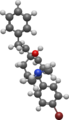
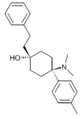
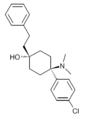
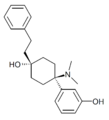
BDPC (systematic name 4-(4-bromophenyl)-4-(dimethylamino)-1-(2-phenylethyl)cyclohexanol) is a potent narcotic analgesic with a distinctive arylcyclohexylamine chemical structure. It was developed by the team led by Prof. Helmut Ortmanns and Dr. Juergen Sauer of the pharmaceutical company Grünenthal in the late 1970s and early 1980s.
Chemistry[edit]
BDPC is a cyclohexanol derivative and is structurally related to other drugs of the arylcyclohexylamine class, such as phencyclidine (PCP) and ketamine. It is specifically a 4-bromo derivative of 2-(2,6-dimethylphenylamino)-2-(2-phenylethyl)cyclohexan-1-one.
Pharmacology[edit]
BDPC acts as a mu-opioid receptor agonist. It is one of the most potent opioid agonists known, approximately 504 times more potent than morphine in animal models.
Medical Use[edit]
BDPC has never been used in humans, but would be expected to produce effects similar to those of other potent opioid agonists, including strong analgesia, sedation, euphoria, constipation, itching and respiratory depression which could be harmful or fatal.
Legal Status[edit]
BDPC is not currently listed in any schedule of the United Nations Drug Conventions, but it may be covered under the analogue act in some countries such as the United States or Australia.
See Also[edit]
 | This medical article is a stub. You can help WikiMD by expanding the page. |
-
 BDPC
BDPC -
 BDPC
BDPC -
 BDPC
BDPC -
 BDPC
BDPC -
 BDPC
BDPC


Advertise on WikiMD — 81,000+ full articles, ~900,000 total pages, ~250 million page views. Global reach, limited time promotional rates from $1/page/day. Learn more · View stats

Medical Disclaimer: WikiMD is for informational purposes only and is not a substitute for professional medical advice. Content may be inaccurate or outdated and should not be used for diagnosis or treatment. Always consult your healthcare provider for medical decisions. Verify information with trusted sources such as CDC.gov and NIH.gov. By using this site, you agree that WikiMD is not liable for any outcomes related to its content. See full disclaimer.
Credits:Most images are courtesy of Wikimedia commons, and templates, categories Wikipedia, licensed under CC BY SA or similar.
Translate page: - East Asian
中文,
日本,
한국어,
South Asian
हिन्दी,
தமிழ்,
తెలుగు,
Urdu,
ಕನ್ನಡ,
Southeast Asian
Indonesian,
Vietnamese,
Thai,
မြန်မာဘာသာ,
বাংলা
European
español,
Deutsch,
français,
Greek,
português do Brasil,
polski,
română,
русский,
Nederlands,
norsk,
svenska,
suomi,
Italian
Middle Eastern & African
عربى,
Turkish,
Persian,
Hebrew,
Afrikaans,
isiZulu,
Kiswahili,
Other
Bulgarian,
Hungarian,
Czech,
Swedish,
മലയാളം,
मराठी,
ਪੰਜਾਬੀ,
ગુજરાતી,
Portuguese,
Ukrainian

