Arylalkylamine
Arylalkylamine is a type of organic compound that contains an amine functional group attached to an aryl group and an alkyl group. Arylalkylamines are a broad class of compounds that include many pharmaceuticals and natural products.
Structure and Properties[edit]
The structure of an arylalkylamine consists of an aryl group, an alkyl group, and an amine group. The aryl group is a phenyl group or a substituted phenyl group. The alkyl group can be a simple alkyl chain or a more complex structure. The amine group can be primary, secondary, or tertiary.
The properties of arylalkylamines depend on the specific groups present in the molecule. For example, the presence of electron-donating or electron-withdrawing groups on the aryl ring can affect the basicity of the amine group. The length and structure of the alkyl chain can also influence the lipophilicity of the compound, which can affect its pharmacological properties.
Synthesis[edit]
Arylalkylamines can be synthesized through several methods. One common method is the reductive amination of an aldehyde or ketone with an arylamine. Another method is the Friedel-Crafts alkylation of an aryl ring with an alkyl halide in the presence of a Lewis acid catalyst.
Applications[edit]
Arylalkylamines have a wide range of applications, particularly in the field of pharmacology. Many drugs, such as amphetamine, methamphetamine, and ephedrine, are arylalkylamines. These compounds often have stimulant, appetite-suppressant, or decongestant effects.
In addition to their pharmaceutical applications, arylalkylamines are also found in many natural products. For example, the neurotransmitter serotonin is an arylalkylamine.
See Also[edit]


Arylalkylamine[edit]
-
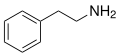 Phenethylamine structure
 -
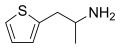 Thiopropamine structure
 -
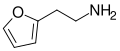 2-Furylethylamine structure
 -
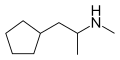 Cyclopentamine structure
 -
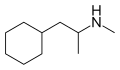 Propylhexedrine structure
 -
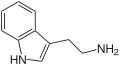 Tryptamine structure
 -
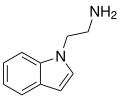 Isotryptamine structure
 -
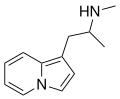 1ZP2MA structure
 -
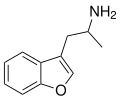 3-APB structure
 -
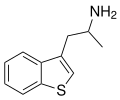 3-APBT structure
 -
 Geranamine structure


Medical Disclaimer: WikiMD is for informational purposes only and is not a substitute for professional medical advice. Content may be inaccurate or outdated and should not be used for diagnosis or treatment. Always consult your healthcare provider for medical decisions. Verify information with trusted sources such as CDC.gov and NIH.gov. By using this site, you agree that WikiMD is not liable for any outcomes related to its content. See full disclaimer.
Credits:Most images are courtesy of Wikimedia commons, and templates, categories Wikipedia, licensed under CC BY SA or similar.
Translate page: - East Asian
中文,
日本,
한국어,
South Asian
हिन्दी,
தமிழ்,
తెలుగు,
Urdu,
ಕನ್ನಡ,
Southeast Asian
Indonesian,
Vietnamese,
Thai,
မြန်မာဘာသာ,
বাংলা
European
español,
Deutsch,
français,
Greek,
português do Brasil,
polski,
română,
русский,
Nederlands,
norsk,
svenska,
suomi,
Italian
Middle Eastern & African
عربى,
Turkish,
Persian,
Hebrew,
Afrikaans,
isiZulu,
Kiswahili,
Other
Bulgarian,
Hungarian,
Czech,
Swedish,
മലയാളം,
मराठी,
ਪੰਜਾਬੀ,
ગુજરાતી,
Portuguese,
Ukrainian

