Oxygen mask
An Oxygen mask is a device designed to deliver oxygen to a person's lungs. It is used in a variety of settings, including emergency medicine, aviation, and underwater diving.
Design and function[edit]
An oxygen mask covers the nose and mouth, allowing the person to breathe in pure oxygen. The mask is connected to an oxygen supply, such as a portable oxygen tank. Some masks also include a reservoir bag that collects oxygen while the person exhales, which can then be inhaled on the next breath.
Uses[edit]
Oxygen masks are used in a variety of situations where a person may need additional oxygen. This includes during medical emergencies, such as cardiac arrest or respiratory failure, as well as in certain professions, such as aviation and underwater diving.
In medicine, oxygen masks are often used in hospitals and emergency medical services to deliver supplemental oxygen to patients who are having difficulty breathing. This can be due to a variety of conditions, including lung disease, heart disease, and trauma.
In aviation, oxygen masks are used to protect passengers and crew from the effects of hypoxia in the event of a loss of cabin pressure.
In underwater diving, oxygen masks are used in scuba diving and surface-supplied diving to provide the diver with a supply of oxygen.
See also[edit]
References[edit]
| Medical equipment | ||||||||||
|---|---|---|---|---|---|---|---|---|---|---|
This medical equipment related article is a stub.
|
| Aviation safety | ||||||||||
|---|---|---|---|---|---|---|---|---|---|---|
This aviation safety related article is a stub.
|
| Underwater diving safety equipment | ||||||||||
|---|---|---|---|---|---|---|---|---|---|---|
This Underwater diving safety equipment related article is a stub.
|

This WikiMD article can only be edited by registered and verified editors. You can log in or register.
-
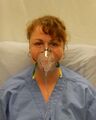 Simple face mask
 -
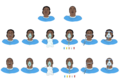 Respiratory care devices
 -
 T-37 solo student pilot
 -
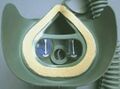 Tightly sealed mask
 -
 Passenger oxygen mask
 -
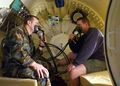 Navy divers testing built-in breathing masks
 -
 Oxygen mask


Medical Disclaimer: WikiMD is for informational purposes only and is not a substitute for professional medical advice. Content may be inaccurate or outdated and should not be used for diagnosis or treatment. Always consult your healthcare provider for medical decisions. Verify information with trusted sources such as CDC.gov and NIH.gov. By using this site, you agree that WikiMD is not liable for any outcomes related to its content. See full disclaimer.
Credits:Most images are courtesy of Wikimedia commons, and templates, categories Wikipedia, licensed under CC BY SA or similar.
Translate page: - East Asian
中文,
日本,
한국어,
South Asian
हिन्दी,
தமிழ்,
తెలుగు,
Urdu,
ಕನ್ನಡ,
Southeast Asian
Indonesian,
Vietnamese,
Thai,
မြန်မာဘာသာ,
বাংলা
European
español,
Deutsch,
français,
Greek,
português do Brasil,
polski,
română,
русский,
Nederlands,
norsk,
svenska,
suomi,
Italian
Middle Eastern & African
عربى,
Turkish,
Persian,
Hebrew,
Afrikaans,
isiZulu,
Kiswahili,
Other
Bulgarian,
Hungarian,
Czech,
Swedish,
മലയാളം,
मराठी,
ਪੰਜਾਬੀ,
ગુજરાતી,
Portuguese,
Ukrainian

