Ajiaco
Traditional soup in Latin American cuisine
Ajiaco is a traditional soup common to several Latin American countries, including Colombia, Cuba, and Peru. The dish is known for its rich flavor and hearty ingredients, often featuring a variety of potatoes, corn, and chicken.
Etymology[edit]
The name "ajiaco" is derived from the word "ají", which refers to a type of chili pepper used in the dish. The term "ajiaco" can be traced back to the Taíno people, indigenous to the Caribbean.
Regional Variations[edit]
Colombian Ajiaco[edit]
In Colombia, ajiaco is particularly associated with the city of Bogotá. The Colombian version typically includes three types of potatoes: criolla, sabanera, and pastusa. A key ingredient is guasca, an herb that imparts a distinctive flavor. The soup is usually served with capers, avocado, and cream on the side.
Cuban Ajiaco[edit]
In Cuba, ajiaco is a thick stew that combines a variety of meats such as pork, beef, and chicken, along with tubers like malanga, yucca, and sweet potatoes. The Cuban version is often seasoned with cumin and oregano.
Peruvian Ajiaco[edit]
In Peru, ajiaco is a simpler dish, often made with potatoes and ají amarillo, a yellow chili pepper. It is typically served with rice and sometimes includes cheese or milk.
Preparation[edit]
The preparation of ajiaco varies by region, but it generally involves simmering the ingredients in a large pot until the flavors meld together. The soup is often cooked slowly to allow the potatoes to break down and thicken the broth.
Cultural Significance[edit]
Ajiaco is more than just a dish; it is a cultural symbol in many Latin American countries. It is often prepared for special occasions and family gatherings, reflecting the diverse culinary traditions of the region.
Related pages[edit]
Gallery[edit]
-
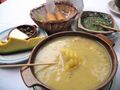 Ajiaco served in a traditional bowl
 -
Close-up of ajiaco with chicken and corn

Ajiaco[edit]

Medical Disclaimer: WikiMD is for informational purposes only and is not a substitute for professional medical advice. Content may be inaccurate or outdated and should not be used for diagnosis or treatment. Always consult your healthcare provider for medical decisions. Verify information with trusted sources such as CDC.gov and NIH.gov. By using this site, you agree that WikiMD is not liable for any outcomes related to its content. See full disclaimer.
Credits:Most images are courtesy of Wikimedia commons, and templates, categories Wikipedia, licensed under CC BY SA or similar.
Translate page: - East Asian
中文,
日本,
한국어,
South Asian
हिन्दी,
தமிழ்,
తెలుగు,
Urdu,
ಕನ್ನಡ,
Southeast Asian
Indonesian,
Vietnamese,
Thai,
မြန်မာဘာသာ,
বাংলা
European
español,
Deutsch,
français,
Greek,
português do Brasil,
polski,
română,
русский,
Nederlands,
norsk,
svenska,
suomi,
Italian
Middle Eastern & African
عربى,
Turkish,
Persian,
Hebrew,
Afrikaans,
isiZulu,
Kiswahili,
Other
Bulgarian,
Hungarian,
Czech,
Swedish,
മലയാളം,
मराठी,
ਪੰਜਾਬੀ,
ગુજરાતી,
Portuguese,
Ukrainian


