Acquacotta
Acquacotta
.jpg)
.jpg)
Acquacotta is a traditional Italian soup that originates from the region of Tuscany, specifically from the area of Maremma. The name "Acquacotta" translates to "cooked water," reflecting its origins as a simple, rustic dish made with readily available ingredients.
History[edit]
Acquacotta has its roots in the peasant cooking of the Maremma region. It was originally a dish made by shepherds and farmers who used whatever ingredients they had on hand. The soup was a way to make a nourishing meal out of very little, often using stale bread, onions, and tomatoes. Over time, the recipe evolved, incorporating more ingredients as they became available.
Ingredients[edit]
The basic ingredients of Acquacotta include:
Additional ingredients that may be added include:
Preparation[edit]
The preparation of Acquacotta involves simmering the onions, tomatoes, and other vegetables in water until they are soft and flavorful. Olive oil is added to enrich the broth. Stale bread is then placed in the soup to soak up the liquid, and the dish is often finished with a poached egg and a sprinkle of cheese.
Variations[edit]
There are many regional variations of Acquacotta, reflecting the diverse ingredients available in different parts of Tuscany. Some versions include beans, while others might incorporate mushrooms or wild herbs. The addition of eggs and cheese is also a common variation.
Cultural Significance[edit]
Acquacotta is more than just a soup; it is a symbol of the resourcefulness and creativity of the people of Maremma. It represents the ability to create something delicious and satisfying from humble beginnings. Today, Acquacotta is enjoyed not only in Tuscany but also in various parts of Italy and around the world.
Related pages[edit]
Gallery[edit]
-
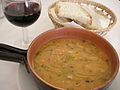 Acquacotta with beans and vegetables


Medical Disclaimer: WikiMD is for informational purposes only and is not a substitute for professional medical advice. Content may be inaccurate or outdated and should not be used for diagnosis or treatment. Always consult your healthcare provider for medical decisions. Verify information with trusted sources such as CDC.gov and NIH.gov. By using this site, you agree that WikiMD is not liable for any outcomes related to its content. See full disclaimer.
Credits:Most images are courtesy of Wikimedia commons, and templates, categories Wikipedia, licensed under CC BY SA or similar.
Translate page: - East Asian
中文,
日本,
한국어,
South Asian
हिन्दी,
தமிழ்,
తెలుగు,
Urdu,
ಕನ್ನಡ,
Southeast Asian
Indonesian,
Vietnamese,
Thai,
မြန်မာဘာသာ,
বাংলা
European
español,
Deutsch,
français,
Greek,
português do Brasil,
polski,
română,
русский,
Nederlands,
norsk,
svenska,
suomi,
Italian
Middle Eastern & African
عربى,
Turkish,
Persian,
Hebrew,
Afrikaans,
isiZulu,
Kiswahili,
Other
Bulgarian,
Hungarian,
Czech,
Swedish,
മലയാളം,
मराठी,
ਪੰਜਾਬੀ,
ગુજરાતી,
Portuguese,
Ukrainian

