2C-O-4
A psychedelic phenethylamine of the 2C family
| 2C-O-4 | |
|---|---|
|
| |
|
| |
| Chemical nomenclature | |
| IUPAC name | 2-(4-isopropoxy-2,5-dimethoxyphenyl)ethanamine
|
| Routes | Oral
|
| Legal status | Uncontrolled |
| Identifiers | |
| CAS Number | 207740-40-1 |
| PubChem | 443680
|
| ChemSpider | 391837 |
| UNII | 7X4X0X0X0X
|
| Chemical data
| |
| Chemical formula | C13H21N1O3
|
| SMILES | CC(C)Oc1cc(OC)c(cc1OC)CCN
|
| InChI | 1S/C13H21NO3/c1-9(2)17-13-7-11(15-3)10(4-5-14)8-12(13)16-6/h7-9H,4-6,14H2,1-3H3
|
| InChIKey | ZZZZZZZZZZZZZZ
|


2C-O-4 is a psychedelic phenethylamine of the 2C family. It is known for its psychoactive effects and is structurally related to other compounds in the 2C series.
Chemical structure and properties[edit]
2C-O-4 is chemically classified as a phenethylamine, which is a compound containing a phenyl ring bound to an amino group through an ethyl chain. The full chemical name of 2C-O-4 is 2-(4-isopropoxy-2,5-dimethoxyphenyl)ethanamine. It features methoxy groups at the 2 and 5 positions of the phenyl ring and an isopropoxy group at the 4 position.
Pharmacology[edit]
The pharmacological effects of 2C-O-4 are not well-documented, but it is believed to act as a serotonin receptor agonist, similar to other compounds in the 2C series. This action is thought to be responsible for its psychedelic effects, which may include altered perception, mood, and cognition.
Effects[edit]
The effects of 2C-O-4 are not extensively studied, but anecdotal reports suggest that it produces psychedelic effects similar to other 2C compounds. These effects may include visual and auditory hallucinations, changes in perception of time and space, and altered emotional states.
Legal status[edit]
2C-O-4 is not specifically controlled under international drug laws, but its legal status may vary by country. It is important to consult local regulations to determine its legality in a specific jurisdiction.
Related compounds[edit]
2C-O-4 is part of the 2C family of psychedelics, which includes other compounds such as 2C-B, 2C-I, and 2C-E. These compounds share a common phenethylamine backbone but differ in their substituents, leading to variations in their effects and potency.
See also[edit]
Gallery[edit]
-
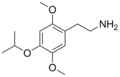 Chemical structure of 2C-O-4
 -
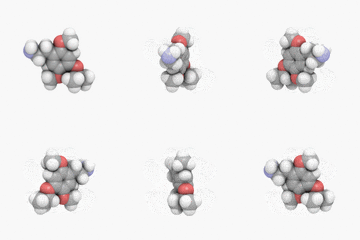 Animation of 2C-O-4 molecule

Medical Disclaimer: WikiMD is for informational purposes only and is not a substitute for professional medical advice. Content may be inaccurate or outdated and should not be used for diagnosis or treatment. Always consult your healthcare provider for medical decisions. Verify information with trusted sources such as CDC.gov and NIH.gov. By using this site, you agree that WikiMD is not liable for any outcomes related to its content. See full disclaimer.
Credits:Most images are courtesy of Wikimedia commons, and templates, categories Wikipedia, licensed under CC BY SA or similar.
Translate page: - East Asian
中文,
日本,
한국어,
South Asian
हिन्दी,
தமிழ்,
తెలుగు,
Urdu,
ಕನ್ನಡ,
Southeast Asian
Indonesian,
Vietnamese,
Thai,
မြန်မာဘာသာ,
বাংলা
European
español,
Deutsch,
français,
Greek,
português do Brasil,
polski,
română,
русский,
Nederlands,
norsk,
svenska,
suomi,
Italian
Middle Eastern & African
عربى,
Turkish,
Persian,
Hebrew,
Afrikaans,
isiZulu,
Kiswahili,
Other
Bulgarian,
Hungarian,
Czech,
Swedish,
മലയാളം,
मराठी,
ਪੰਜਾਬੀ,
ગુજરાતી,
Portuguese,
Ukrainian

