2002–2004 SARS outbreak among healthcare workers
Overview of the SARS outbreak among healthcare workers from 2002 to 2004
Overview[edit]
The 2002–2004 SARS outbreak among healthcare workers was a significant event during the SARS epidemic, highlighting the vulnerability of healthcare professionals to infectious diseases. The outbreak began in late 2002 and continued until mid-2004, affecting numerous countries and leading to substantial morbidity and mortality among healthcare workers.
Background[edit]
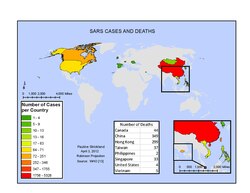
The SARS coronavirus (SARS-CoV) was first identified in Guangdong, China, in November 2002. The virus quickly spread to other regions, facilitated by international travel and inadequate infection control measures. Healthcare workers were particularly at risk due to their close contact with infected patients and the initial lack of understanding of the virus's transmission dynamics.
Impact on Healthcare Workers[edit]
Healthcare workers were disproportionately affected during the SARS outbreak. They accounted for a significant percentage of the total cases, with many contracting the virus in hospital settings. The high rate of infection among healthcare workers was attributed to several factors, including insufficient personal protective equipment (PPE), inadequate infection control protocols, and the highly contagious nature of the virus.
Personal Protective Equipment[edit]

The use of personal protective equipment was critical in reducing the transmission of SARS among healthcare workers. PPE included items such as surgical masks, N95 respirators, gloves, and eye protection.

Despite the availability of PPE, many healthcare facilities faced shortages, and there was often a lack of training on the proper use of protective gear. This led to increased exposure and infection rates among healthcare staff.
Infection Control Measures[edit]

In response to the outbreak, hospitals implemented stringent infection control measures. These included isolating infected patients, enhancing hand hygiene practices, and improving ventilation systems. The establishment of dedicated SARS wards and the use of negative pressure rooms were also critical in controlling the spread of the virus within healthcare settings.
Psychosocial Impact[edit]
The SARS outbreak had a profound psychosocial impact on healthcare workers. Many experienced high levels of stress and anxiety due to the fear of contracting the virus and the pressure of working in high-risk environments. The stigma associated with SARS also affected healthcare workers, leading to social isolation and discrimination in some cases.
Lessons Learned[edit]
The SARS outbreak among healthcare workers underscored the importance of preparedness and rapid response in managing infectious disease outbreaks. Key lessons included the need for adequate PPE supplies, comprehensive training for healthcare workers, and robust infection control protocols. These lessons have informed subsequent responses to infectious disease threats, including the COVID-19 pandemic.
Related Pages[edit]
Sponsored Health Resource

W8MD Weight Loss, Sleep & MedSpa
Looking for physician-supervised weight loss, semaglutide, tirzepatide, or GLP-1 receptor agonist options? W8MD helps eligible patients in New York City, Brooklyn, New Jersey, Connecticut, Pennsylvania, Delaware, and greater Philadelphia with medical weight loss, sleep medicine, and long-term maintenance support.
GLP-1 specials: Affordable GLP-1 injections NYC and Philadelphia starting from $29.99/week and up for semaglutide with insurance accepted for qualifying visits, and $45/week and up for tirzepatide with insurance accepted for qualifying visits. Self-pay options start from $59.99/week and up for semaglutide and $69.99/week and up for tirzepatide.
Medical weight loss NYC | Affordable GLP-1 injections NYC | Budget GLP-1 weight loss shots Philadelphia | New Jersey medical weight loss | NYC medical weight loss | Philadelphia medical weight loss | Sleep clinic NYC | W8MD's Philadelphia GLP-1 doctor | Weight loss prescriptions NYC
Book a W8MD appointment · View GLP-1 specials
Paid promotional message. Eligibility, pricing, insurance coverage, medication availability, and results vary. Medical evaluation required.

Medical Disclaimer: WikiMD is for informational purposes only and is not a substitute for professional medical advice. Content may be inaccurate or outdated and should not be used for diagnosis or treatment. Always consult your healthcare provider for medical decisions. Verify information with trusted sources such as CDC.gov and NIH.gov. By using this site, you agree that WikiMD is not liable for any outcomes related to its content. See full disclaimer.
Credits:Most images are courtesy of Wikimedia commons, and templates, categories Wikipedia, licensed under CC BY SA or similar.
Translate page: - East Asian
中文,
日本,
한국어,
South Asian
हिन्दी,
தமிழ்,
తెలుగు,
Urdu,
ಕನ್ನಡ,
Southeast Asian
Indonesian,
Vietnamese,
Thai,
မြန်မာဘာသာ,
বাংলা
European
español,
Deutsch,
français,
Greek,
português do Brasil,
polski,
română,
русский,
Nederlands,
norsk,
svenska,
suomi,
Italian
Middle Eastern & African
عربى,
Turkish,
Persian,
Hebrew,
Afrikaans,
isiZulu,
Kiswahili,
Other
Bulgarian,
Hungarian,
Czech,
Swedish,
മലയാളം,
मराठी,
ਪੰਜਾਬੀ,
ગુજરાતી,
Portuguese,
Ukrainian

