Heavy menstrual bleeding

Editor-In-Chief: Prab R Tumpati, MD
Obesity, Sleep & Internal medicine
Founder, WikiMD Wellnesspedia &
W8MD's medical weight loss NYC, sleep center NYC
Philadelphia medical weight loss and Philadelphia sleep clinics

Heavy Menstrual Bleeding (HMB), also known as Menorrhagia, is a medical condition characterized by abnormally heavy or prolonged menstrual bleeding. With HMB, menstrual bleeding lasts more than 7 days and/or is so heavy that it requires frequent changing of sanitary protection. This condition can significantly impact an individual's physical, emotional, and social life.
Causes[edit]
Heavy menstrual bleeding can result from a variety of causes, including but not limited to:
- Uterine fibroids: Noncancerous growths in the uterus can lead to heavier or prolonged menstrual bleeding.
- Polycystic ovary syndrome (PCOS): A hormonal disorder causing enlarged ovaries with small cysts on the outer edges.
- Endometriosis: A condition in which tissue similar to the lining inside the uterus is found outside the uterus, causing heavy periods.
- Adenomyosis: When the tissue that normally lines the uterus grows into the muscular wall of the uterus.
- Bleeding disorders: Conditions such as von Willebrand disease can cause heavy menstrual bleeding.
- Pelvic inflammatory disease (PID): An infection of the reproductive organs can result in heavy bleeding.
- Thyroid problems: Both hypothyroidism and hyperthyroidism can cause heavy menstrual bleeding.
- IUD (Intrauterine device): A non-hormonal IUD can increase menstrual flow.
Symptoms[edit]
Symptoms of heavy menstrual bleeding include:
- Soaking through one or more sanitary pads or tampons every hour for several consecutive hours
- Needing to use double sanitary protection to control menstrual flow
- Needing to wake up to change sanitary protection during the night
- Bleeding for more than a week
- Passing large blood clots (larger than a quarter)
- Restricting daily activities due to heavy menstrual flow
- Symptoms of anemia, such as tiredness, fatigue, or shortness of breath
Diagnosis[edit]
Diagnosis of heavy menstrual bleeding may involve:
- Medical history evaluation and physical examination
- Blood tests to check for anemia, thyroid problems, and blood-clotting disorders
- Pap test to check for changes in cervical cells
- Endometrial biopsy to take a sample of the lining of the uterus
- Ultrasound to obtain images of the uterus, ovaries, and pelvis
Treatment[edit]
Treatment for heavy menstrual bleeding may include:
- Non-steroidal anti-inflammatory drugs (NSAIDs): To help reduce menstrual blood loss
- Tranexamic acid: To reduce menstrual blood loss
- Oral contraceptives: To help regulate menstrual cycles and reduce bleeding
- Hormonal IUD (Intrauterine device): To reduce menstrual bleeding
- Iron supplements: To treat anemia caused by heavy menstrual bleeding
- Surgery: Procedures such as endometrial ablation, uterine artery embolization, or hysterectomy may be considered in severe cases
Prevention[edit]
While it may not be possible to prevent heavy menstrual bleeding, regular check-ups with a healthcare provider can help manage symptoms and underlying conditions. Maintaining a healthy lifestyle and managing stress levels can also be beneficial.
See Also[edit]

- Heavy menstrual bleeding
-
 What is HMB
 -
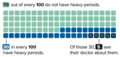 Prevalence
 -
 Heavy Menstrual Bleeding - Treatment Workflow
 -
 Treatment Choices
 -
 Efficacy of Treatments
 -
 Surgical Side Effects
 -
 Side Effects
 -
 Cancer Risks


Ad. Transform your health with W8MD Weight Loss, Sleep & MedSpa

Tired of being overweight?
Special offer:
Budget GLP-1 weight loss medications
- Semaglutide starting from $29.99/week and up with insurance for visit of $59.99 and up per week self pay.
- Tirzepatide starting from $45.00/week and up (dose dependent) or $69.99/week and up self pay
✔ Same-week appointments, evenings & weekends
Learn more:
- GLP-1 weight loss clinic NYC
- W8MD's NYC medical weight loss
- W8MD Philadelphia GLP-1 shots
- Philadelphia GLP-1 injections
- Affordable GLP-1 shots NYC
|
WikiMD Medical Encyclopedia |
Medical Disclaimer: WikiMD is for informational purposes only and is not a substitute for professional medical advice. Content may be inaccurate or outdated and should not be used for diagnosis or treatment. Always consult your healthcare provider for medical decisions. Verify information with trusted sources such as CDC.gov and NIH.gov. By using this site, you agree that WikiMD is not liable for any outcomes related to its content. See full disclaimer.
Credits:Most images are courtesy of Wikimedia commons, and templates, categories Wikipedia, licensed under CC BY SA or similar.
Translate this page: - East Asian
中文,
日本,
한국어,
South Asian
हिन्दी,
தமிழ்,
తెలుగు,
Urdu,
ಕನ್ನಡ,
Southeast Asian
Indonesian,
Vietnamese,
Thai,
မြန်မာဘာသာ,
বাংলা
European
español,
Deutsch,
français,
Greek,
português do Brasil,
polski,
română,
русский,
Nederlands,
norsk,
svenska,
suomi,
Italian
Middle Eastern & African
عربى,
Turkish,
Persian,
Hebrew,
Afrikaans,
isiZulu,
Kiswahili,
Other
Bulgarian,
Hungarian,
Czech,
Swedish,
മലയാളം,
मराठी,
ਪੰਜਾਬੀ,
ગુજરાતી,
Portuguese,
Ukrainian
